Sea Trout on the Flats of Denmark:
A European Hidden Treasure
By IGFA Representative, Ambassador, and Captain, Omar Bo Gade
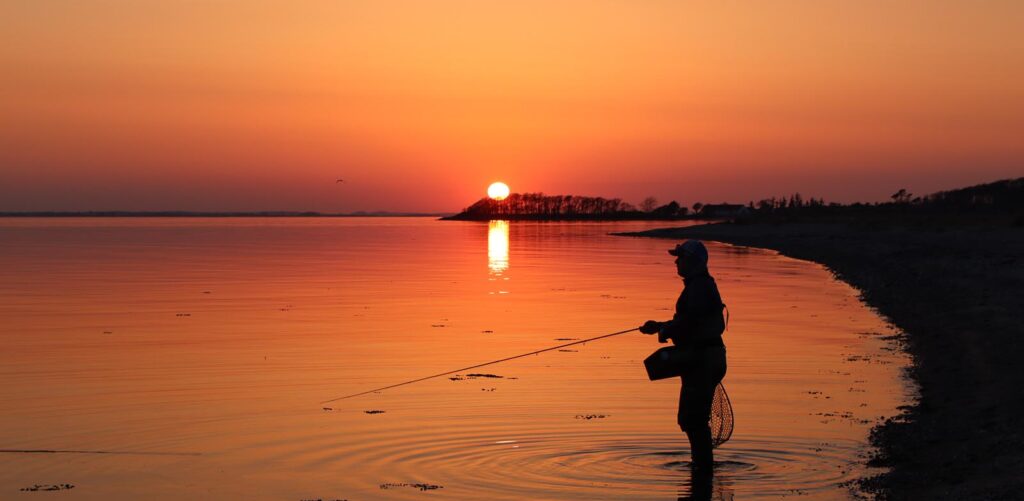
For most anglers around the world, Denmark is not the first place that comes to mind when thinking about saltwater fly fishing. The imagination tends to drift toward tropical flats, not to a modest Scandinavian island shaped by farmland, castles, forests, and calm, shallow seas. Yet, on the island of Fyn in the heart of Denmark, an extraordinary fishery unfolds along hundreds of kilometers of coastline. It is a fishery that defies expectations, blending northern European landscapes with a style of sight-fishing more reminiscent of the Bahamas than of the Baltic. This is the world of the Danish sea-run brown trout, the havørred (in Danish), a fish that has become the symbol of a coast loved by generations of locals.
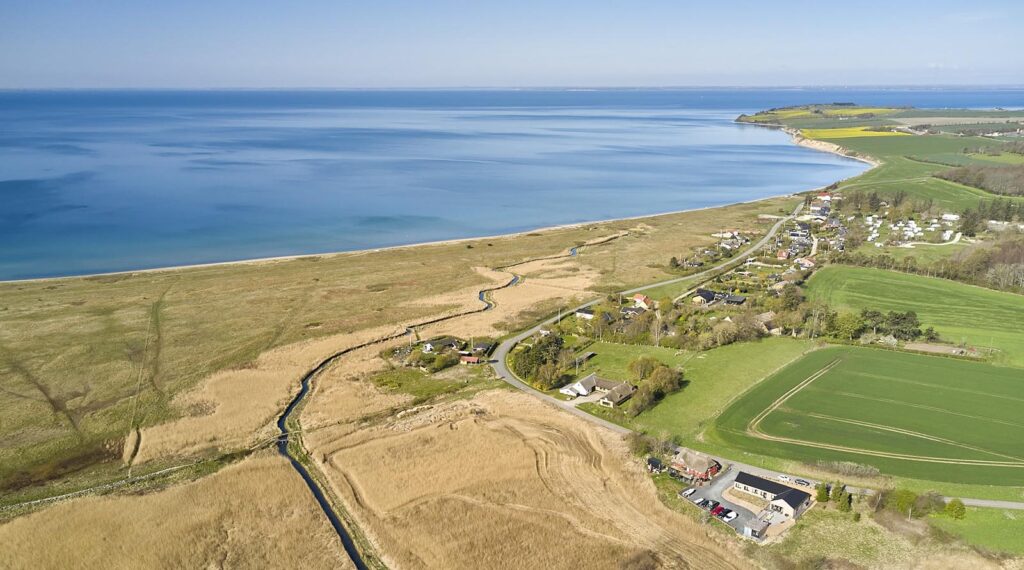
Fyn lies between Zealand, the region where Copenhagen sits, and the larger Jutland peninsula. Although connected by bridges and serviced by modern fast trains, the island retains a gentle calmness that feels detached from the urgency of modern life. The roads wind through rolling fields, small farms, and villages with red-tiled houses and fairytale-like thatched roofs. The island of Fyn is round-shaped, and in about 45 to 60 minutes drive, you can always reach the opposite side. The sea is always close, often only a few minutes' drive away, and along that sea stretches one of the most unusual cold-saltwater environments for fly and light tackle spin anglers: shallow flats, sandy bays, and long stretches of wadeable coastline where sea trout cruise for food with the same elegance with which bonefish glide across tropical shallows.
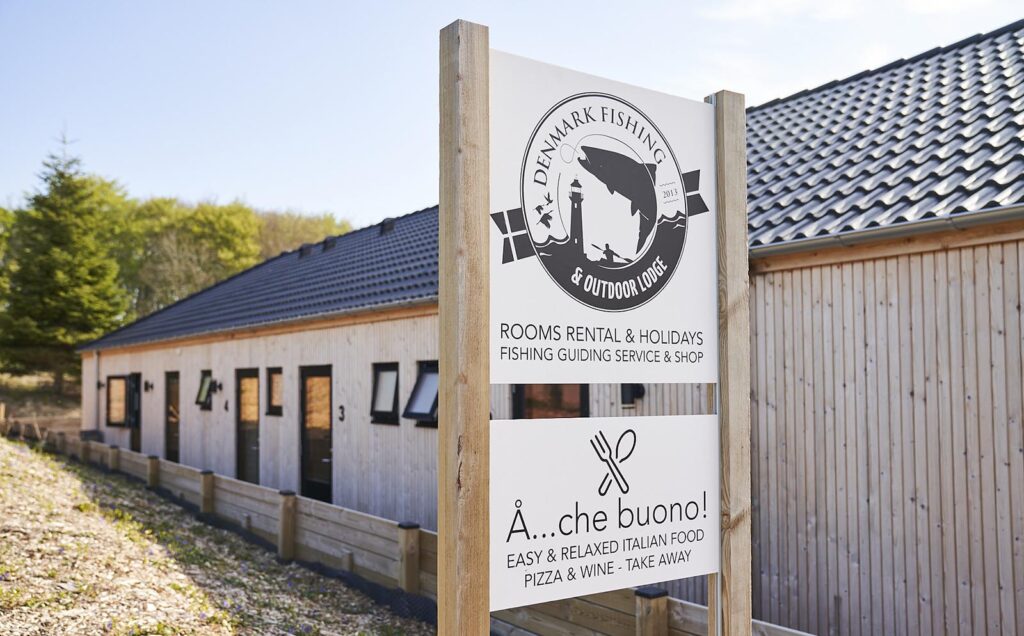
The sense of arrival for a visiting angler becomes even more distinct upon discovering that this island is home to Denmark’s first and only true fishing lodge, founded more than a decade ago. Set in the southwestern corner of Fyn, it has become the natural gathering place for anglers from all over the world who want to experience this fishery in its purest form. This operation is worth mentioning as it has played a decisive role in elevating the very culture of this fishery; its staff has refined and developed coastal techniques through countless days on the water, and has been instrumental in promoting and sharing this style of sea trout fishing far beyond Denmark’s borders. It is the only meeting point where the guides, guests, and anglers from every background share the same fascination for this coastline. Here, conversations about wind directions and the colors of the flies or the lures to use simply flow naturally. Thanks to the staff's commitment to this fishery, this lodge becomes the true doorway into the Danish sea trout experience.
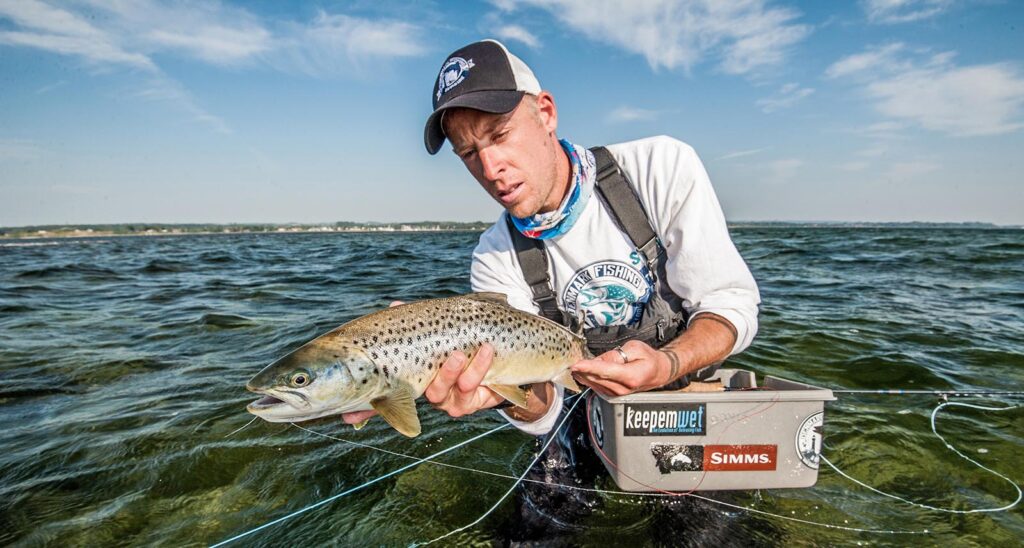
To understand why this fishery is unique, one must first understand the fish itself. The sea-run brown trout of Denmark are genetically identical to resident freshwater brown trout, yet unlike their river-bound relatives, they leave their natal streams shortly after reaching a certain size and head for the coast. This happens because the streams on Fyn are simply too small to support large trout populations; the fish develop an instinct to seek bigger waters (namely the sea) where food and space are far more abundant. These streams are not large rivers but tiny chalk streams and narrow waterways, often only a couple of meters wide, where no fishing takes place. They function as nurseries, protected and intimate. But once the young trout smoltify and taste saltwater, they transition to a coastal life spent along the very edges of the island’s shallow shores. The majority of the fish do not venture far into the open Baltic, nor do they undertake long migrations like salmon. Instead, they remain close to Fyn, feeding along beaches, eelgrass meadows, and sheltered shallow fjords. It is this behavior that makes the fishery unique and, in my opinion, so evocative of tropical flats fishing. The trout stay in shallow water, often less than knee-deep, gliding over bright sand in a way that allows anglers to see them, cast to them, and at times even witness the precise moment when they take the fly.
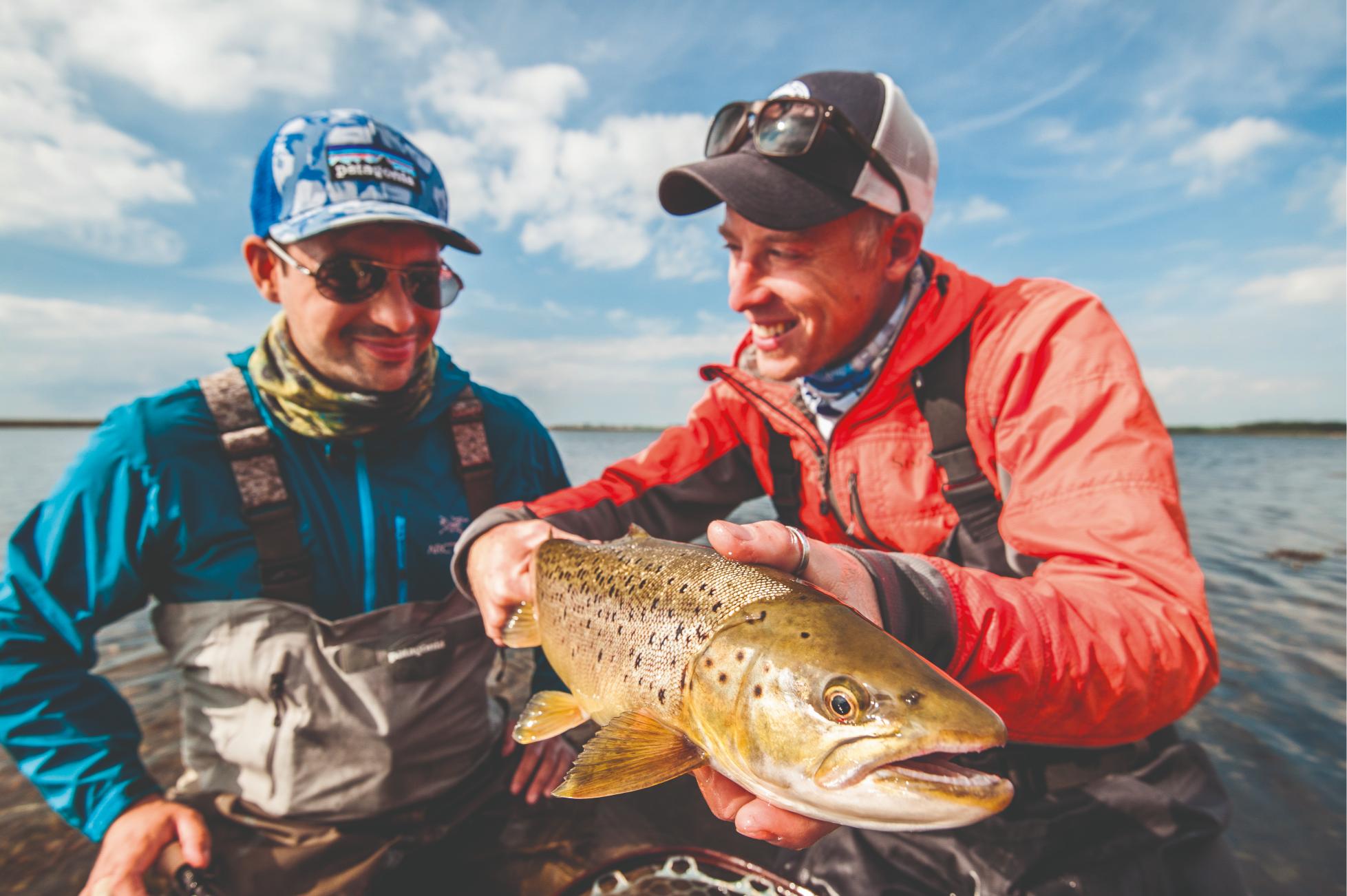
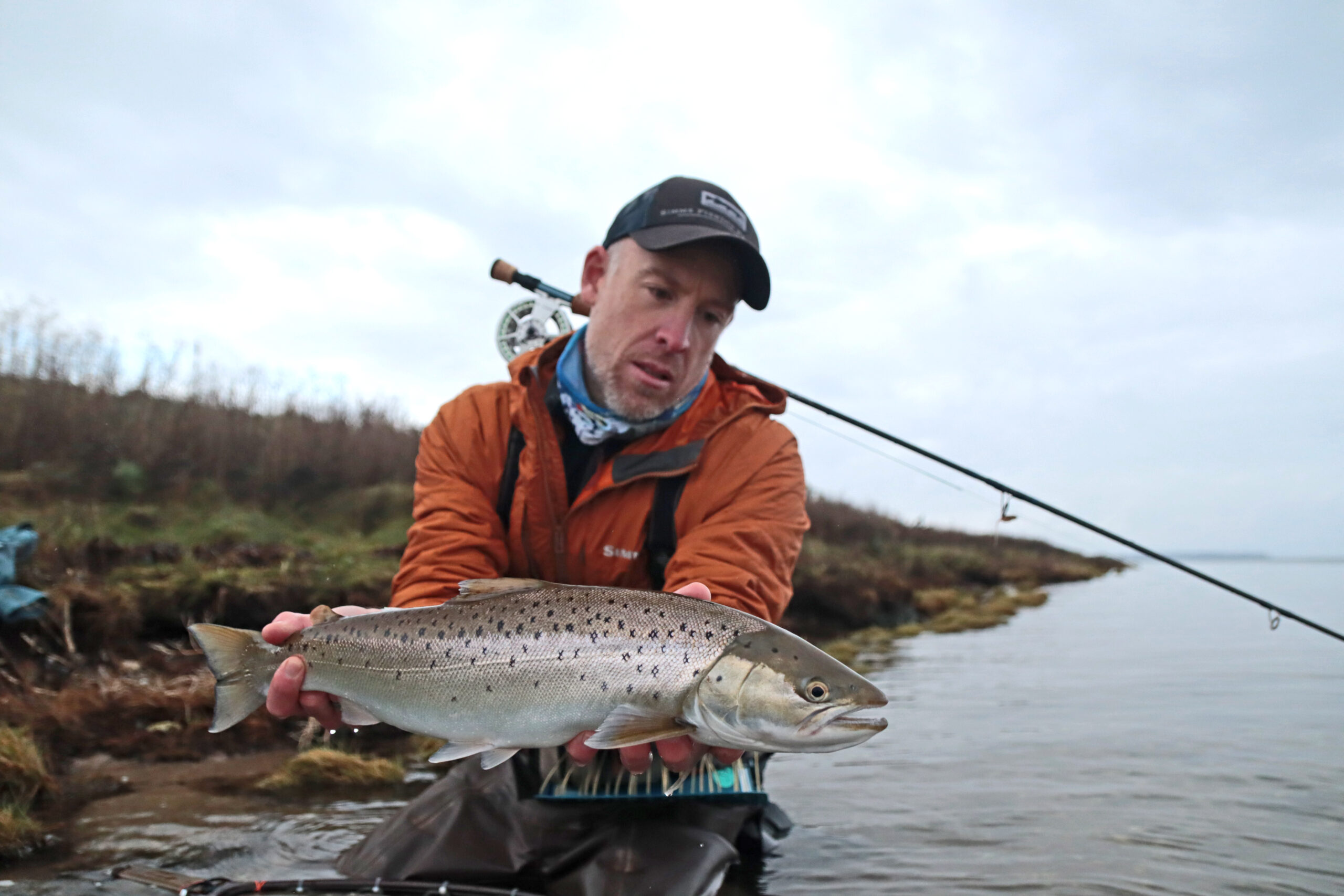
I have personally drawn this comparison over the years, observing how sea trout move across the flats with the same ghostlike subtlety as bonefish. Through my presentations, articles, and talks abroad, this analogy has become central to explaining the uniqueness of this fishery. It still amazes me that in northern Europe, in an environment so different from the tropics, one can find a fishery that brings the angler into the sea, wading slowly among crabs, seagrass, and small baitfish while scanning for the faint shadows of cruising trout. In summer, when the light is high and the sea turns transparent, the resemblance becomes even more striking. Trout can even take flies on the surface, rising delicately like trout on a river or slashing aggressively like tropical predators. Although sight-fishing can be extraordinary, most of the time the angler fishes by blind-casting and covering as much water as possible, searching for cruising fish.
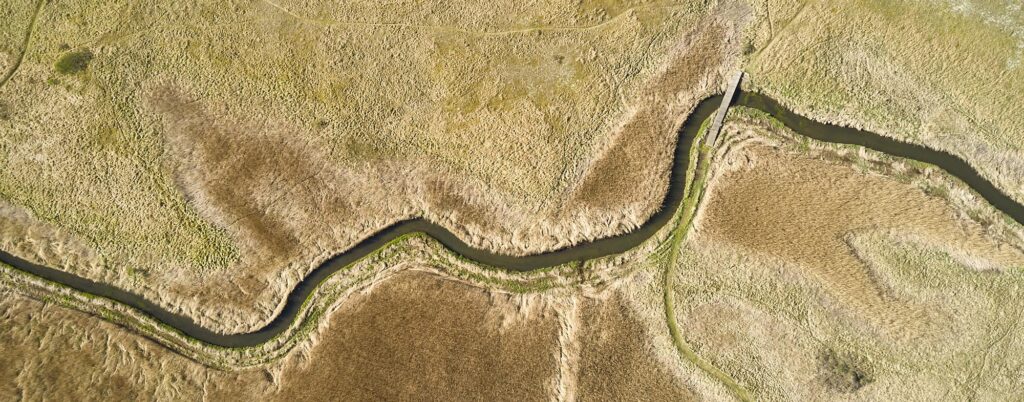
The richness of the coastal fishery, however, did not arise on its own. By the 1960s, many of the small rivers that feed the sea trout population were in decline. Straightened for agriculture or confined within narrow channels, they had lost the complexity and natural structure essential for trout reproduction. Spawning gravels had vanished, water flows had been altered, and sediment increasingly smothered what little habitat remained. Recognizing what was at stake, local fishing clubs, municipalities, and dedicated volunteers launched one of the first and most longeve water systems restoration initiatives in Denmark, Europe, and the world: the project known today as Havørred Fyn. Over many decades, hundreds of carefully planned restoration actions were carried out: gravel beds were rebuilt, culverts redesigned or removed, and streams reshaped to restore natural flow and oxygenation. These were not grand or dramatic interventions, but a patient and steady accumulation of thoughtful improvements that, little by little, brought life back to the waterways.
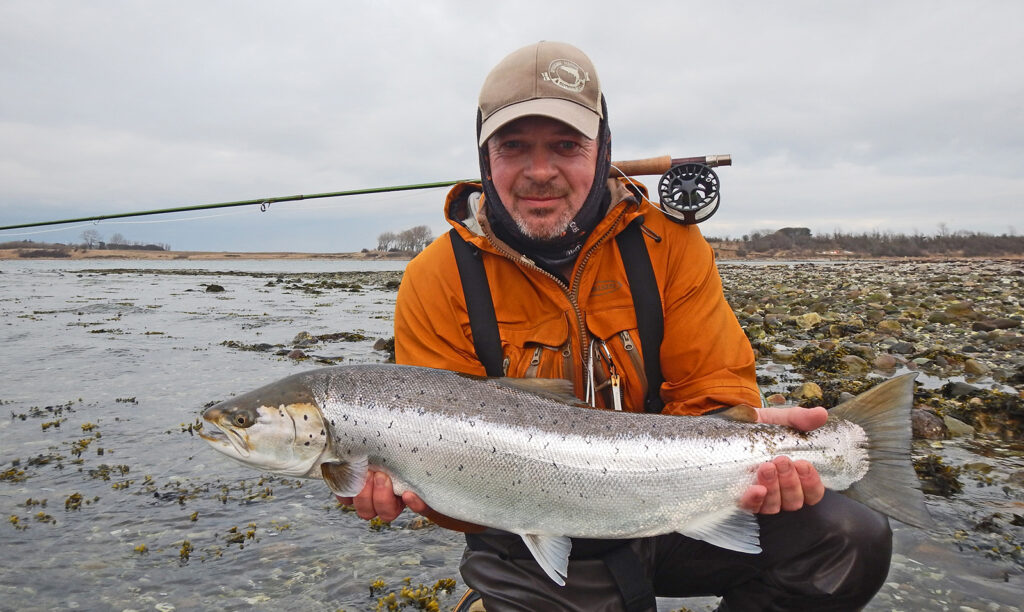
The transformation has been remarkable. Waterways that once appeared lifeless now hold vibrant numbers of juvenile trout. Freshwater nurseries are thriving again, and the coastal population has become stable and robust, thanks also to the support of smolt releases from the hatchery established in Odense, which each year helps rear native young trout for reintroduction into their original small streams. Today, when an angler wades into the sea on a calm morning, scanning the water for movement, that moment is made possible by decades of quiet, determined restoration work carried out far inland in those tiny rivulets.
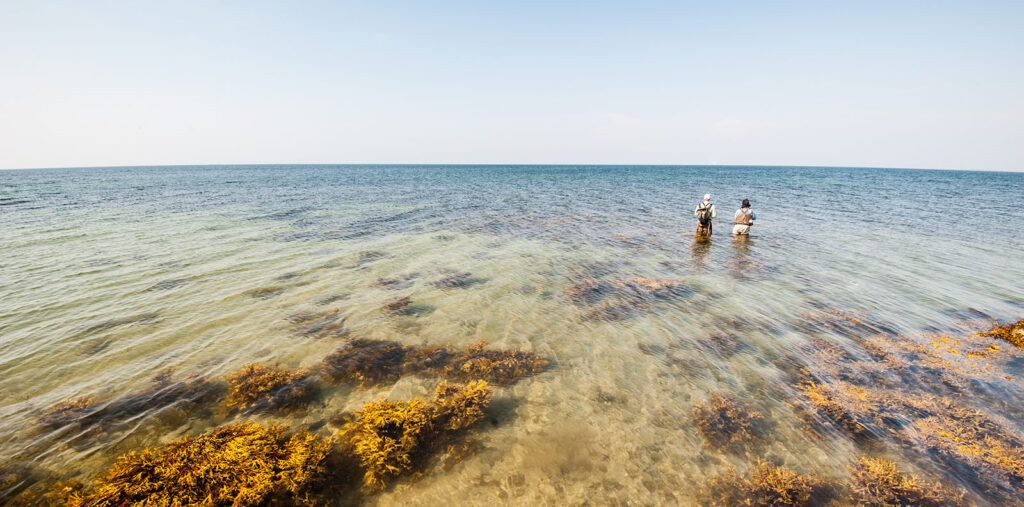
Fishing for sea trout on the Danish coast of the island of Fyn is like stepping into a world where time moves differently. The approach is slow, deliberate, and observant. I often describe it as meditative. You wade into the sea with long, careful strides, feeling the firm texture of sand under your boots and watching how the light refracts on the bottom. The coastline can offer everything from bright, sandy bays to darker patches of eelgrass, and the fish can hold anywhere. On calm days, the water is so transparent that the angler becomes entirely visible to the fish, and any sudden movement sends them fleeing. But this is only one face of the fishery. On days with wind and waves, the angler must cast long, punch the line through gusts, and cover water methodically. For fly anglers, a well-executed double haul is therefore indispensable.
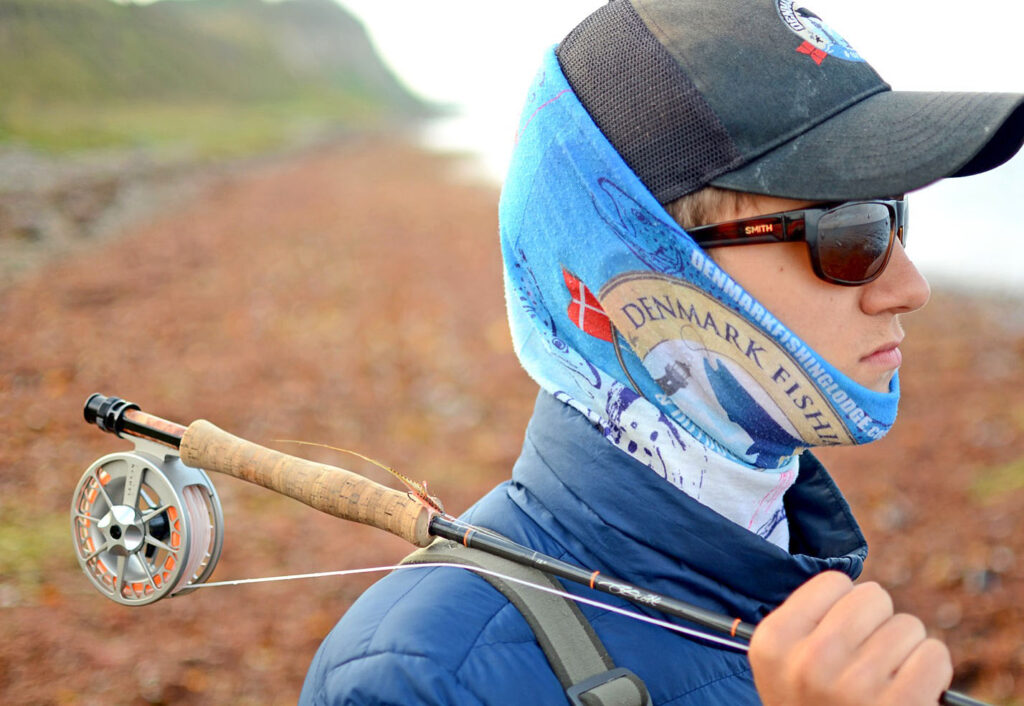
I always recommend a six- or seven-weight fly rod with a fast, responsive action, paired with a floating line and a leader no shorter than twelve feet. Casting distance truly matters here. While subtle presentations can be crucial during summer’s calmest mornings or evenings—one of my favorite times of the year, most of the season demands long, confident casts to cover as much water as possible. The coastline is vast, and the trout are always on the move. This is why, on Fyn, unlike on a river, local knowledge and guidance are indispensable. Good physical condition also enhances the overall experience, because this fishery is built on movement; an angler may walk and fish hundreds of meters of coastline before finding active fish. This is a destination for those who value the immersion of being in the sea, who enjoy the search as much as the catch, and who appreciate fish that are strong, wild, and exceptionally beautiful, even if they are not comparable in average size to, for example, Argentinian river sea trout. Here, most fish range between 40 and 50 centimeters, an ideal “fun-size” game fish, while larger trout over 60, or even 70 or 80 centimeters, are rarer but always possible on any given cast!
Flies vary with the season and the conditions. Shrimp patterns are constant companions, and sparse sand eel imitations, small baitfish flies, and modest streamers all have their moments. In summer, when trout feed high in the water column, surface flies, or larger foam patterns can produce exhilarating takes. One of today's most popular and reliable patterns is the “Jan Kenobi” fly, developed a few years ago by Jan Nachtigal, a guide from the previously mentioned lodge, as an all-around, easy-to-fish and easy-to-tie imitation that has proven remarkably effective. Success depends on understanding not only what the trout are feeding on, but also how the water is moving. Calm seas reward subtle, natural presentations, while wind and waves call for patterns with greater presence and movement.
Over the years, I have come to admire how this fishery rewards attentiveness, adaptability, and a deep respect for the shifting moods of the sea. Spin anglers can also enjoy this fishery, using light tackle and rods rated up to 15–20 grams, paired with small lures that imitate the natural prey in the water, such as young sand eels or small baitfish.
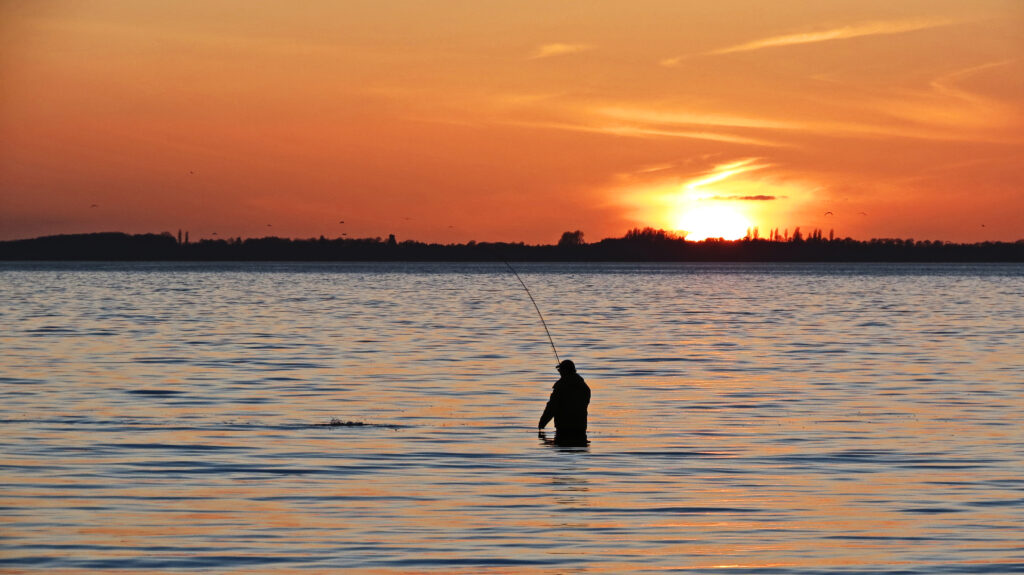
One of the most enchanting aspects of the Danish sea trout fishery appears at dusk and dawn. As daylight fades or begins to return, the entire coast seems to soften. The sea becomes quieter, the sky deepens, and the world feels suspended. During these moments, sea trout can even rise, breaking the surface with subtle rings or gentle swirls. I have spent countless summer days and evenings walking kilometers and watching these signs, casting into the half-light, and feeling the indescribable excitement when the line tightens into a sea trout that has taken the fly just beneath the surface. These hours capture the very soul of the fishery: quiet, atmospheric, intimate, and deeply connected to the natural rhythm of the coast, where it is not the number of fish caught that matters, but the experience itself.
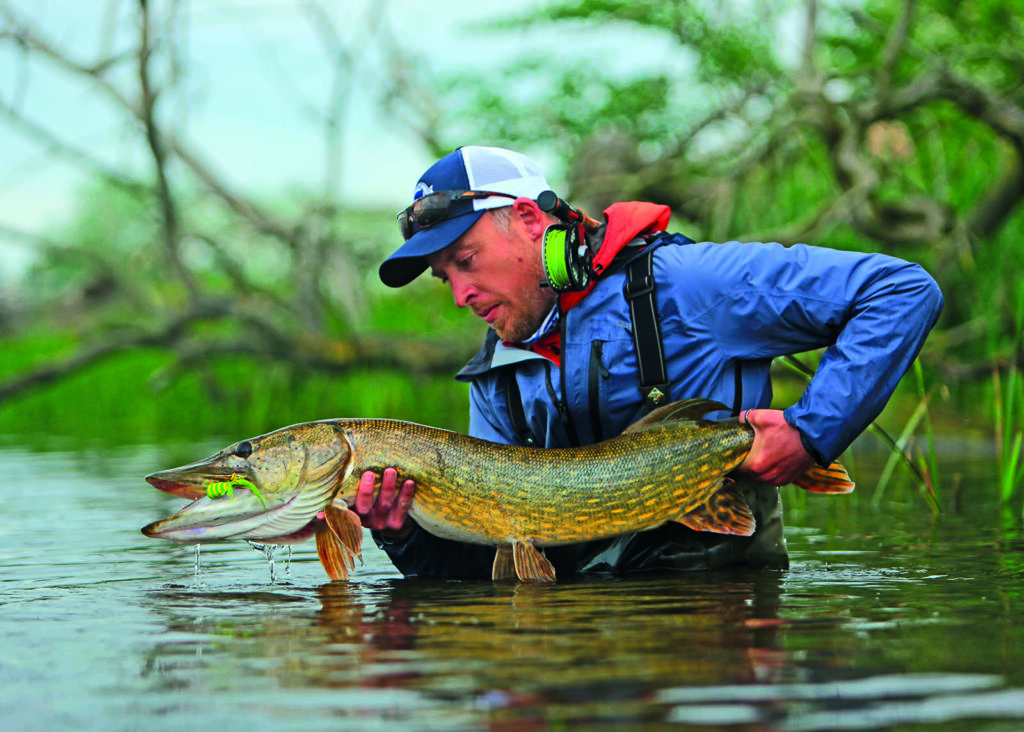
The story of Fyn’s fishing region would be incomplete without acknowledging another dimension of its offerings. Hidden inland, beyond the bright coastal landscape, lie small private lakes—often within secluded hunting estates—that hold northern pike of extraordinary size. These shallow, tea-colored waters, rich in water lilies and submerged vegetation, form ideal habitats for powerful predators. Access is extremely restricted and available only through a single long-established local partnership that has carefully safeguarded these places over time. Thanks to this unique arrangement, a limited number of anglers can experience one of Europe’s most distinctive pike fly-fishing opportunities offered only for a few weeks each year.
Fishing these lakes is an entirely different world from the coast. The angler stands in a small aluminum boat powered by an electric motor, gliding silently along the edges of reeds. Streamers in copper, chartreuse, silver, black, or purple dance through the water, provoking sudden and explosive reactions. Sometimes a pike follows right to the boat, jaws opening in the final second. Other times, the surface erupts in the distance as a fish hunts among the weeds. Fish exceeding one meter are present, and not rare at all, and the possibility of record-class specimens adds an electric dimension to every cast. These lakes complement the coastal fishery perfectly, offering power and aggression in contrast to the sea trout’s elegance and subtlety.
Returning to the coast after a day inland reinforces the sense of harmony that defines fishing on Fyn. The sea rests again under the evening light, and the coastline invites anglers back into its rhythm.
Everything feels connected: the tiny brooks where trout begin their lives, the restored streambeds, the wide open beaches, the eelgrass meadows, and the lodge that ties together the experience for visitors from around the world. Fyn becomes more than a fishing destination. It becomes a place that grows quietly within the memory, shaped by early mornings, long walks along the sea, and the silver flash of a trout taken in clear water.
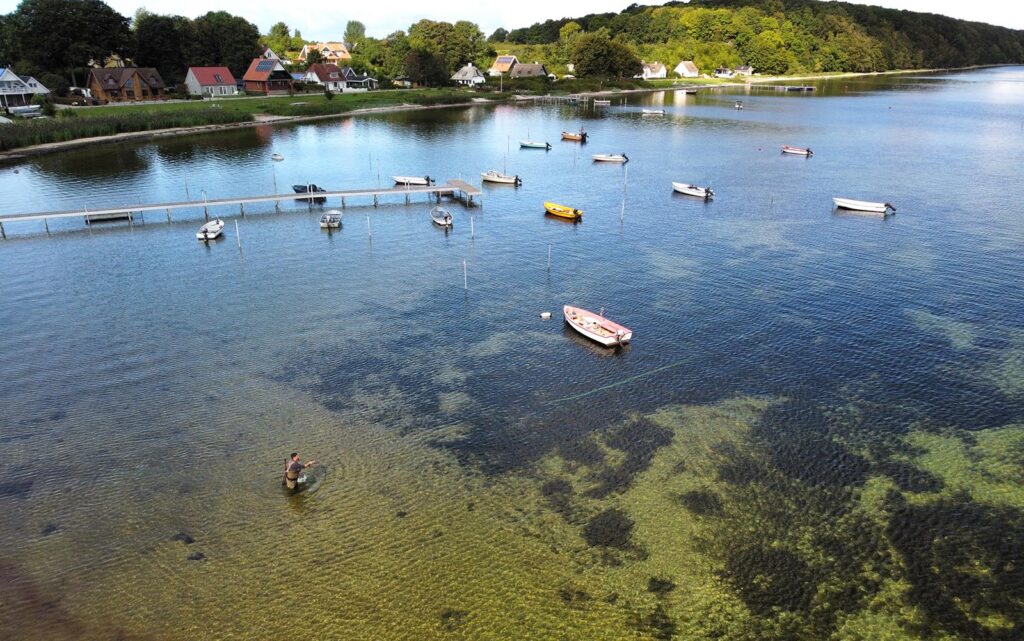
In the end, what makes sea trout fishing on Fyn so unforgettable is the harmony of all these elements. I know of no other place on earth where an angler can wade in knee-deep saltwater, casting to wild trout over bright sand flats and gin-clear water beneath a northern sky, and among the few places that offer anything remotely comparable, none possess the quiet charm, cultural depth, and welcoming character of Denmark’s island of Fyn. This is not a destination for those who seek high numbers of fish; it is a place for anglers who wish to add something genuinely different to their portfolio: a new species, a new style of fishing, and a new kind of experience, whether with a fly rod or spinning gear. For anyone ready to embrace a saltwater adventure defined by authenticity, subtlety, and the joy of encountering a fish found nowhere else in such conditions, the journey begins here.
Last but not least, Denmark itself is a fascinating little country to explore; it’s the ancient homeland of the Vikings and the birthplace of many famous fairytales through Hans Christian Andersen.
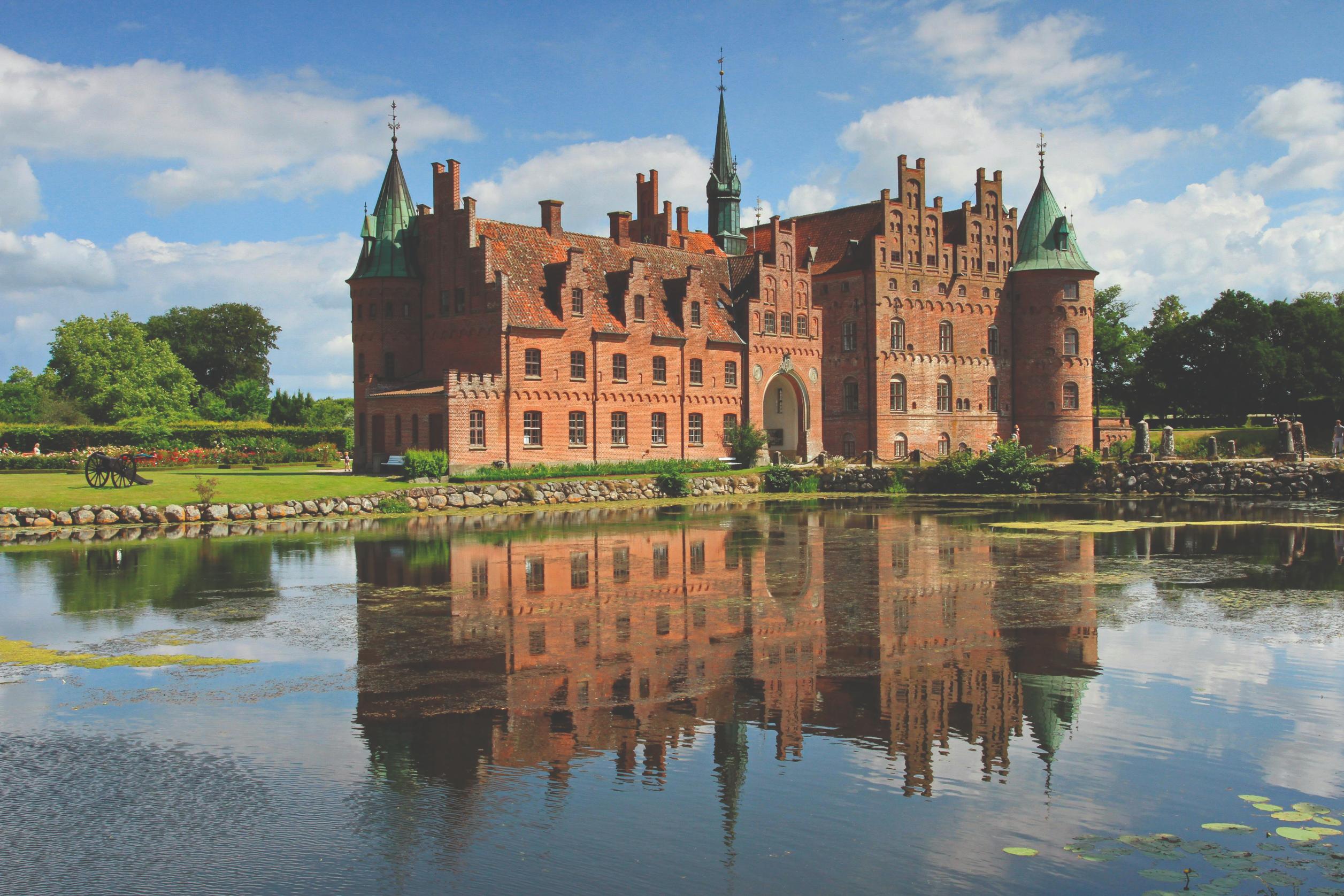
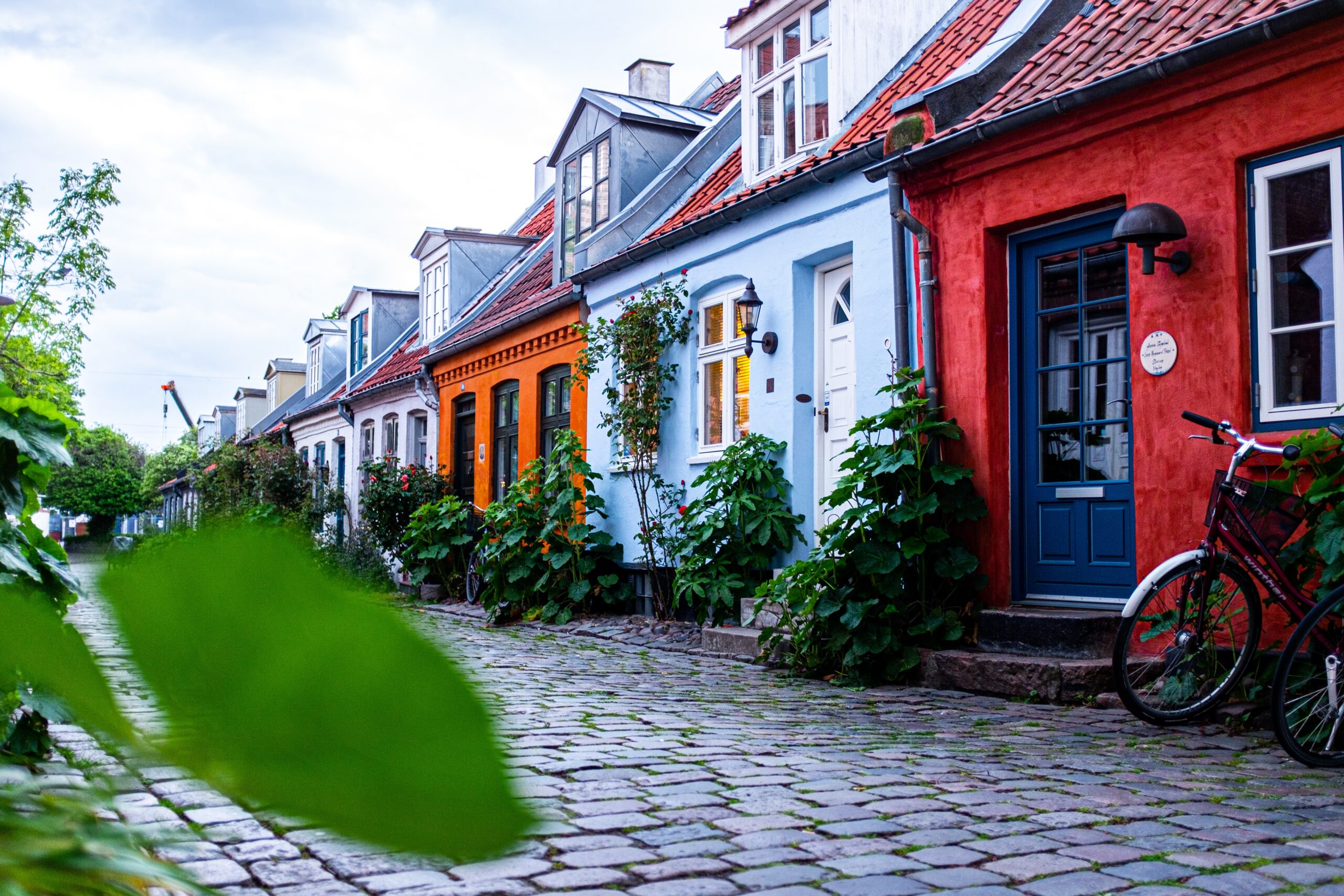
Copenhagen’s vibrant modern food scene, with its Michelin-starred restaurants and a former three-time “best restaurant in the world,” blends seamlessly with a landscape of historic castles and deep cultural heritage. Together, they add a rich and unexpected dimension to a fishing adventure, or to a family trip that beautifully combines tourism and angling.
_______________
Fish & Stay at the Denmark Fishing & Outdoor Lodge
 Bid on this exceptional European angling escape at IGFA’s International Auction from Sunday, January 18th-25th, with online bidding available to anglers everywhere.
This package includes three days of fishing and a four-night stay at the Denmark Fishing & Outdoor Lodge in Fyn, Denmark—widely regarded as the best destination in Europe for sea trout, whether fishing by fly or spin. Fyn is a stunning island known for its pristine coastline, where you’ll fish diverse natural environments, including rocky reefs and sandy beaches.
Designed for two guests, the package includes four nights in a double room, daily breakfast, sandwich lunches to go, and dinners (drinks and desserts not included).
Your fishing experience features a blend of guided and self-guided outings: two half-days with a certified local guide beginning on your first day, plus two full days of independent fishing, supported by expert local tips from lodge staff. Additional days and services are available at an added cost. Gratuities for guides and staff are appreciated.
Don’t miss your chance to bid on this unforgettable Scandinavian fishing adventure—online bidding opens January 18th.