Announcing the 2026-2027 Forage Fish Research Program Fellows: Advancing Vital Ecosystem Studies in Florida
The IGFA is proud to announce two new Forage Fish Research Program (FFRP) Fellows for the 2026-2027 cohort, chosen by the Florida Forage Fish Coalition, which includes the IGFA, Pew Charitable Trusts, Fish Florida, Florida Wildlife Federation, Angler Action Foundation, American Sportfishing Association, Tampa Bay Estuary Program, and Wild Oceans. We want to extend a special thank you to Fish Florida for their continued funding of these important fellowships.

Entering its 10th year, the FFRP has a strong contingent of Data Partners for the Fellows to collaborate with on their research, including FWC’s Fish and Wildlife Research Institute, Southwest Florida Water Management District, Tampa Bay Estuary Program, Florida Department of Environmental Protection, and the Aquatic Preserve Program. These partnerships illustrate the FFRP’s commitment to multidisciplinary collaboration and research on critical habitats and fisheries in Florida and beyond.

Our 2026-2027 FFRP Fellows are Kaylee Tallon from the University of North Florida and Melanie Gomez from the University of Florida. 
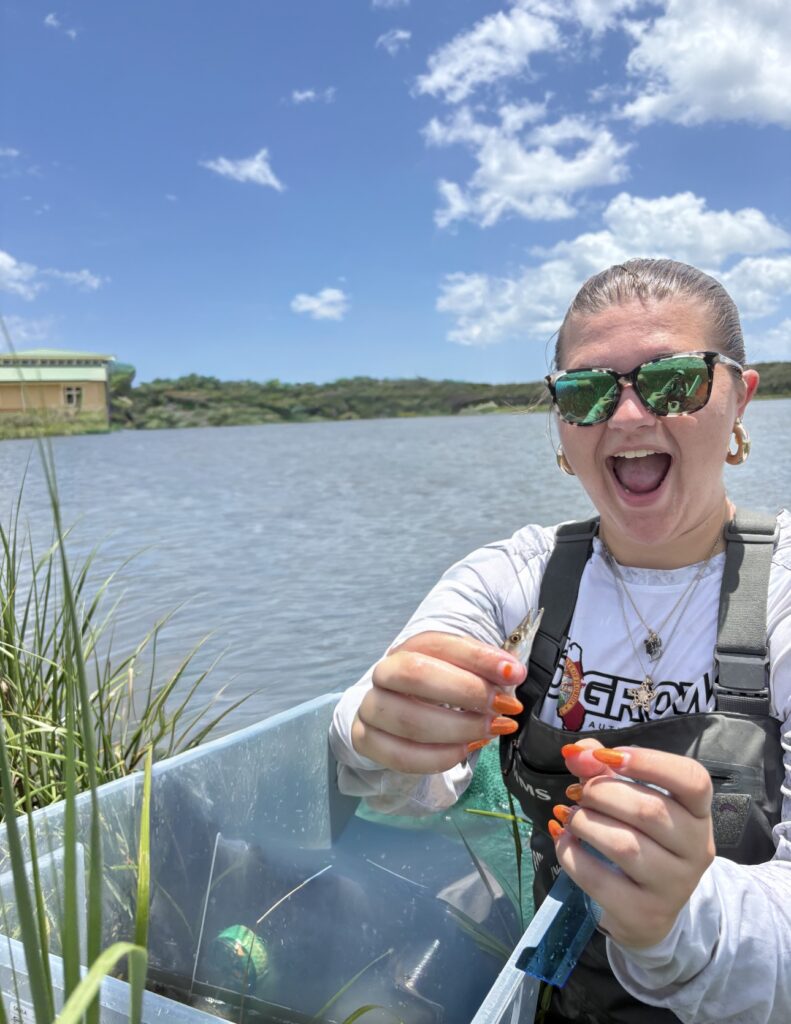
Kaylee Tallon
M.S. Student, University of North Florida

Project: “Influence of Dredging and Anthropogenic Disturbance on Hydrology and Forage Fish Abundance in the Lower St. Johns River”

Kaylee’s project will evaluate the potential effects of dredging on freshwater flow and its impact on forage fish abundance in the Lower St. Johns River Estuary. She will integrate several long-term datasets including FWC’s Fisheries Independent Monitoring (FIM) data, freshwater discharge data from U.S. Geological Survey gauging stations within the St. Johns River watershed, and Regional Land Coverage Data from NOAA to evaluate the before-and-after effects of dredging and shoreline development to identify key drivers of forage fish dynamics.

With an overarching goal of developing predictive models linking flow conditions and habitat alteration to forage fish abundance, this project will provide resource managers with data-driven thresholds for effective estuarine conservation, minimum flow level development, and restoration planning. Results from this study will advance our knowledge of forage fish species and their relationships with environmental, biotic, and anthropogenic factors, and will support improved management and conservation strategies for forage fish within estuarine ecosystems. 

Melanie Gomez
Ph.D. Student, University of Florida

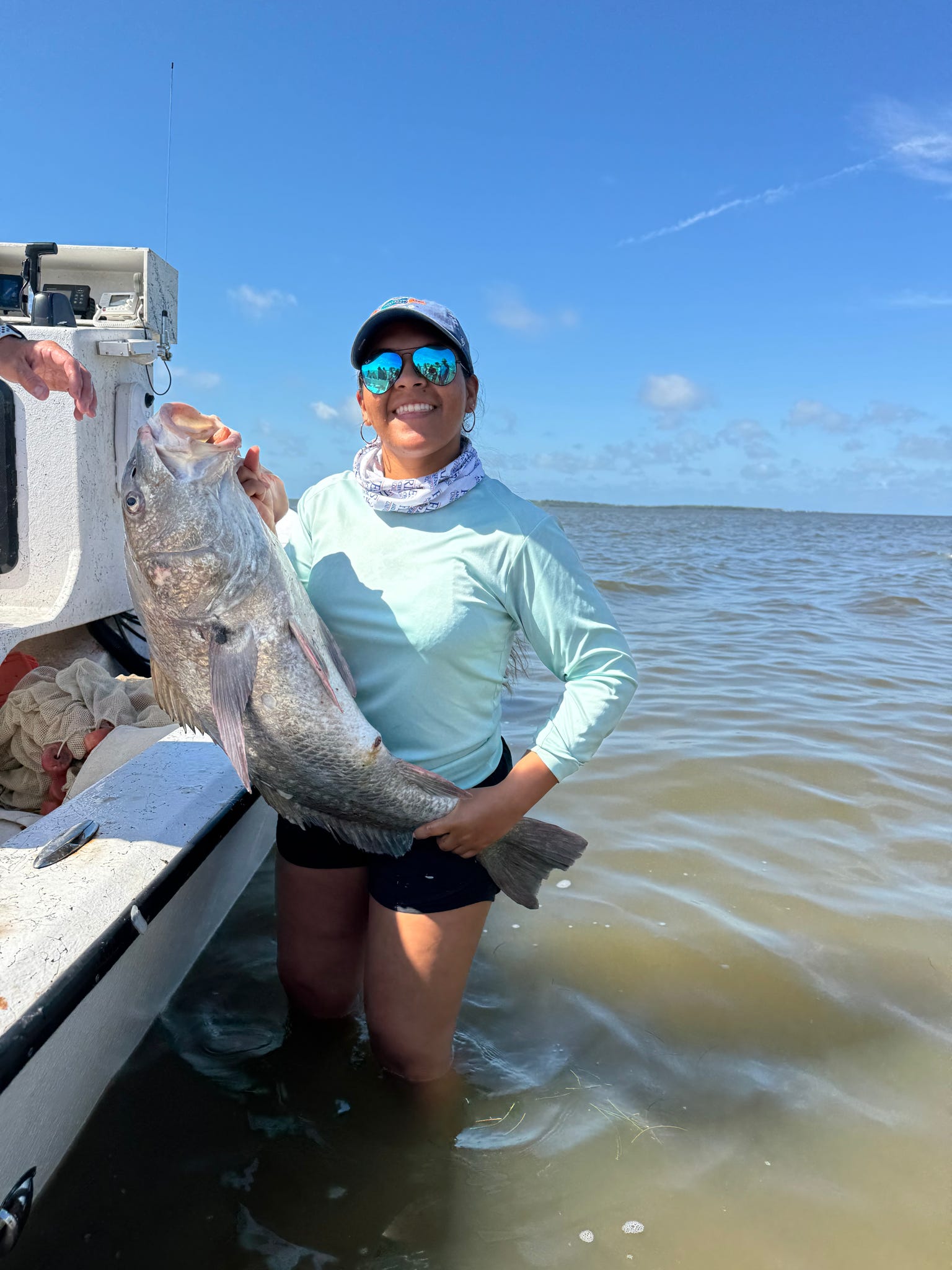
Project: “Linking SEAMAP Trawl and BRUV Data to Evaluate Forage Fish as a Predictor of Reef Fish Abundance”    

Melanie’s project aims to assess the magnitude and variability of the forage fish-reef fish relationship at both local and regional scales. By linking data from Baited Remote Underwater Video (BRUV) surveys and data from the Southeast Area Monitoring and Assessment Program (SEAMAP), this study will test whether forage fish availability exerts bottom-up control on reef fish abundance and composition across space, time, and reef type.

This project seeks to answer the following key questions: 1) At the scale of an individual BRUV site, does forage fish abundance predict reef fish abundance and assemblage structure? 2) At a broader scale, does the abundance and composition of the forage fish assemblage measured by the SEAMAP Summer and Fall Shrimp/Groundfish survey predict reef fish abundance and assemblage structure observed on nearby BRUVs? 3) Does either relationship hold similarly on artificial and natural reefs, or does one reef type show a stronger response than the other?

These results will advance our understanding of reef fish attraction and production on natural and artificial reefs and will help managers better anticipate how forage fish population changes may cascade to the reef fish species anglers depend on.

The 2026-2027 Forage Fish Research Program Fellows are set to make significant contributions to understanding Florida's vital coastal ecosystems. Their research will provide valuable insights into forage fish community structure, human and environmental stressors, and habitat use, helping to guide conservation efforts and sustainable management of Florida’s aquatic preserves and fisheries. We look forward to seeing the impact of their work on preserving these critical habitats for future generations.