IGFA Great Marlin Race Founders Take Home 2025-2026 Crown
Bob and Sally Kurz Win 25-26 IGFA Great Marlin Race
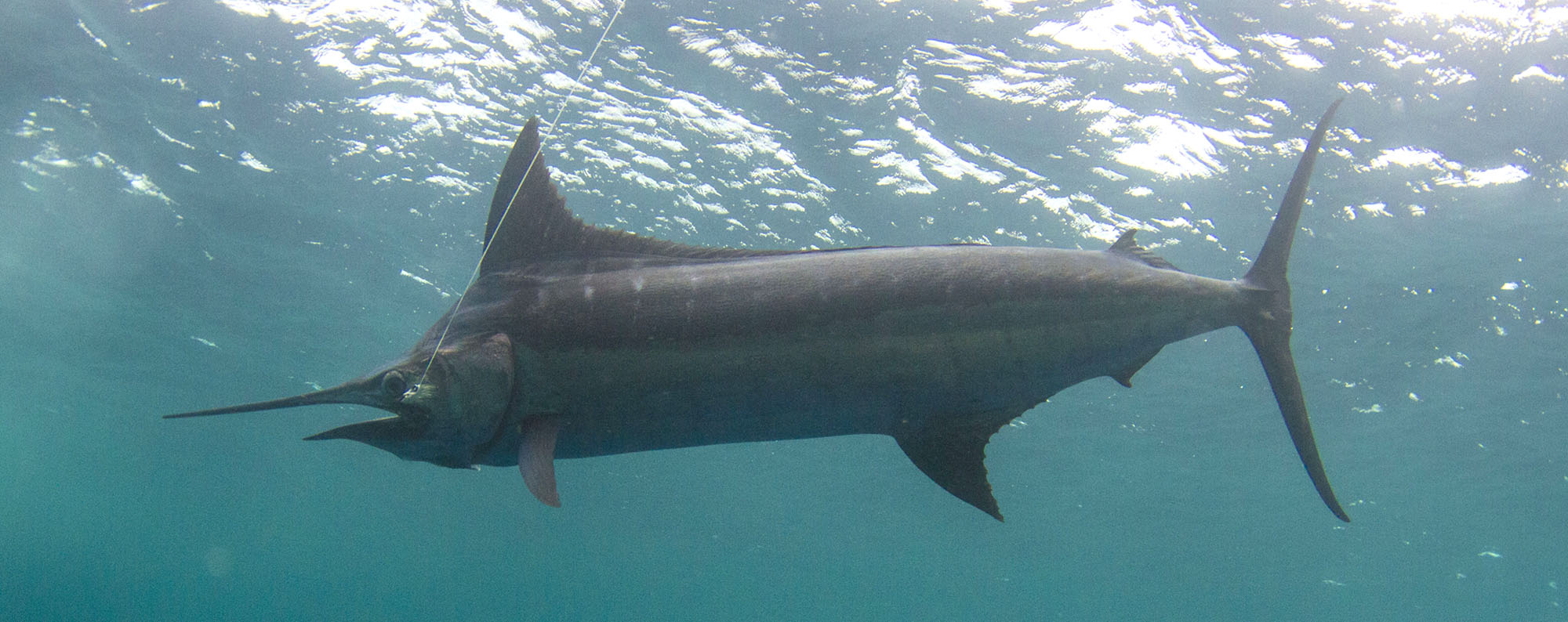
 The International Game Fish Association (IGFA) Great Marlin Race, Presented by Costa Sunglasses, is a partnership between the IGFA and Dr. Barbara Block’s lab at Stanford University that brings together anglers and scientists in a unique collaboration that advances billfish research and conservation around the world. More than a competition, the race turns recreational anglers into citizen scientists, equipping them with state-of-the-art satellite tags that are deployed on the billfish they catch and release. The tags transmit valuable data to program partners at Stanford University, helping uncover migratory patterns, habitat preferences, and behavioral traits of these remarkable fish.
Since its inception in 2011, the IGFA Great Marlin Race has become the largest citizen science billfish satellite tagging initiative of its kind, with more than 720 satellite tags deployed across the globe. The program has transformed our understanding of billfish behavior and movement, providing critical information that supports science-based conservation and management efforts. Each year, the race, which runs from October 1 to September 30, recognizes the tag sponsors, anglers, and crews whose tagged fish travel the greatest distance, highlighting extraordinary migrations while showcasing the vital role anglers play in advancing billfish science and conservation.
This year, sponsors funded 63 satellite tags. Of those, 45 have been deployed across eight countries, bringing the program’s total to 27 countries. Another 31 tags from previous events remain aboard vessels and are expected to be deployed during the 2026-2027 race.
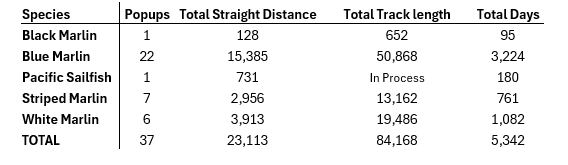
During the 2025-2026 race, 37 tags surfaced, and their data revealed some truly incredible results (see table below). A glimpse at the total statistics from this year’s race puts the impact of this program in perspective. The IGFA Great Marlin Race collected 5,342 days of tracking data on five billfish species. Incredibly, those tags covered a combined 84,168 nautical miles, enough to circumnavigate the globe nearly four times.
2025-2026 IGFA Great Marlin Race Winner
The IGFA is excited to declare that the winners of the 2025-2026 IGFA Great Marlin Race are IGFA Trustee Bob Kurz and IGFA Representative Sally Kurz for their blue marlin tag sponsored during the 2025 Kona Pacific Blue Marlin Tournament. This is a truly special moment for Bob and Sally as well 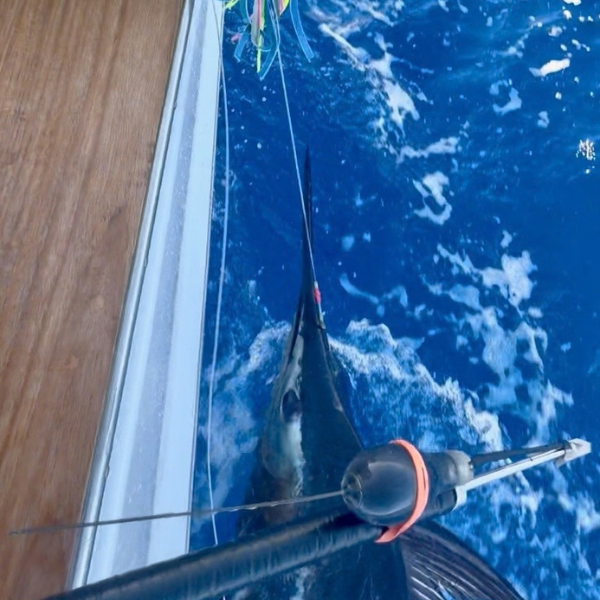 as the IGFA because Bob Kurz founded the concept of the Great Marlin Race with Dr. Barbara Block in 2009 at the Hawaiian International Billfish Tournament, two years prior to the IGFA coming on board and growing the research program internationally. Bob and Sally have been the IGFA Great Marlin Race’s greatest supporters through matching campaigns, tag sponsorships, and organizing the annual Kona and Southern California tagging events. The IGFA is extremely grateful for both Bob and Sally’s support, and we are ecstatic that one of their tags won the annual race for the first time.
The victorious tag was deployed off Kona, Hawaii, on a 200 lb blue marlin caught by Dave Free aboard 2nd Offense, captained by Kevin Hibbard. Kevin Hibbard, an accomplished tagger, positioned the tag perfectly for the long journey. After 180 days, the tagged fish popped up an impressive 3,575nm from where it was deployed after traveling a total estimated distance of 5,424nm. The program judges event winners based on straight-line distance as opposed to total estimated distance due to error in geolocation estimates along the fish’s journey.
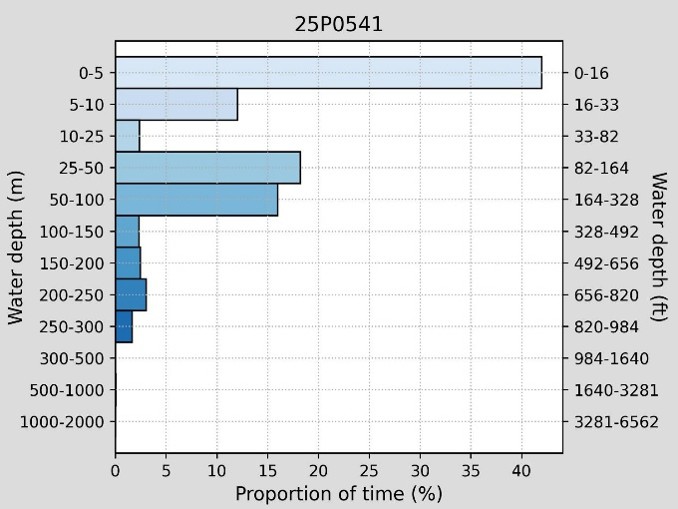
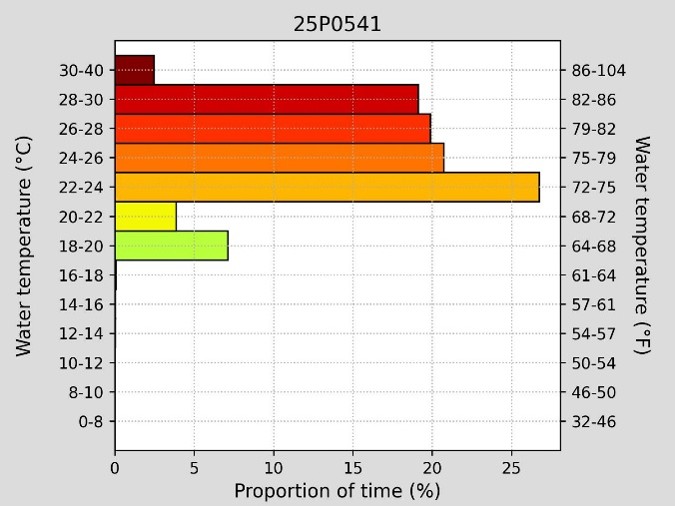
Following deployment, this fish circled southeast around Hawaii before turning south. However, around 10°N it turned east and continued in that direction for more than two months. Approximately 500 nm west of the southern coast of Mexico, this fish turned south towards the Galapagos and crossed into the southern hemisphere west of the Galapagos, where the tag popped off, for a total estimated track length of 5,424 nm. Over the course of the deployment, this blue spent approximately 55% of the time within 10 m (33 ft) of the surface where the water temperature ranged between 25 and 29°C (77 – 84°F). Deeper dives typically ranged between 25 and 100 m (82 – 328 ft), where the water temperature ranged between 13 and 28°C (55 and 82°F). The deepest dive occurred on December 4, 2025, to a depth of 373 m (1,223 ft), where the water temperature was 10°C (50°F), the coldest water experienced during the deployment.
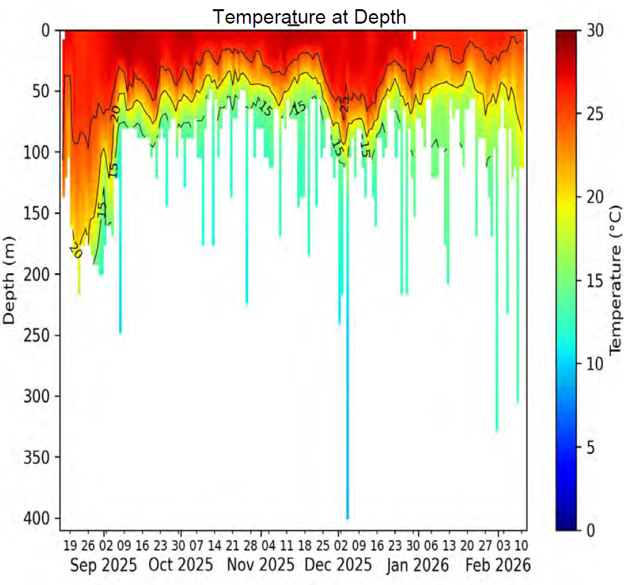
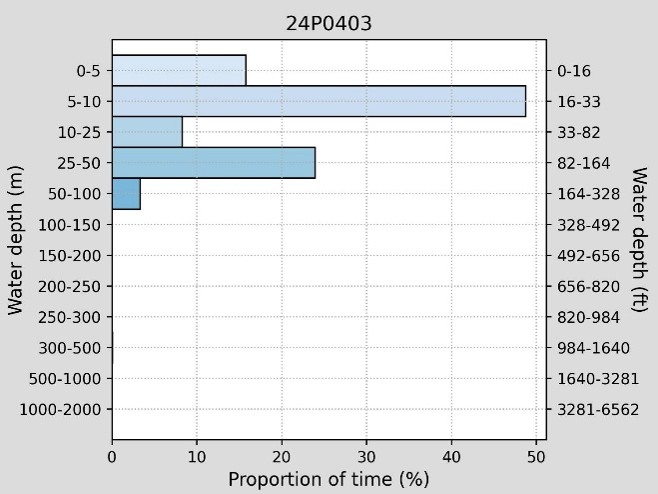
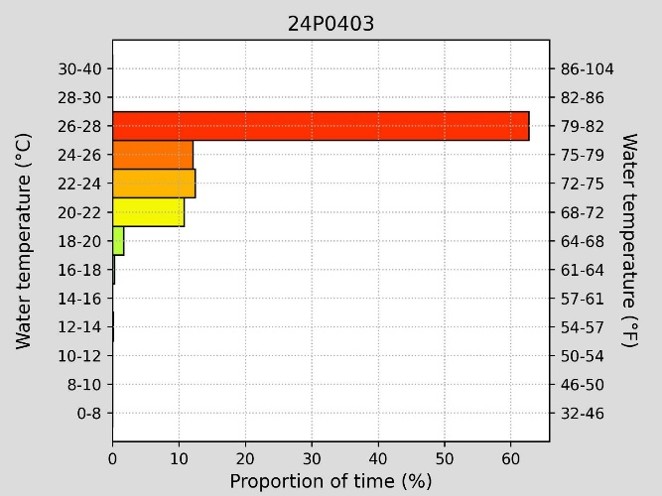
_______________________________________
Team "Sea Weez" takes Second Place
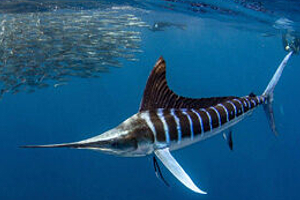
The runner-up, a 150lb striped marlin, was sponsored and tagged aboard Sea Weez out of French Polynesia. The Sea Weez, captained by Ross Finlayson, is a top tag sponsor with 19 tags deployed over the past few years and more to be deployed in 2026 and 2027. This second-place striped marlin was caught by Bob Edmonds and tagged by Hannah Drake. This result is of particular interest because it was further evidence of striped marlin population connectivity not well matched with current international management assumptions, leading to the IGFA developing a new study exploring striped marlin population structure throughout the Pacific.
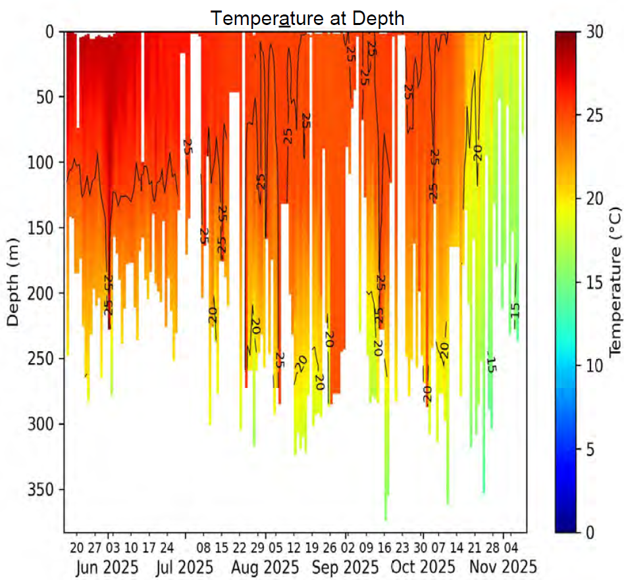
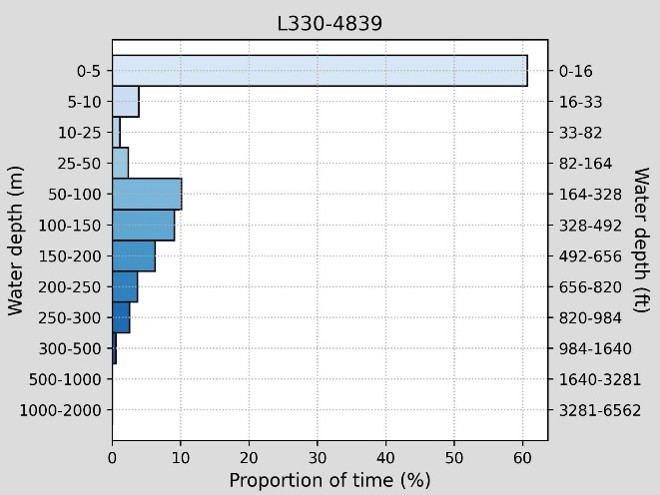
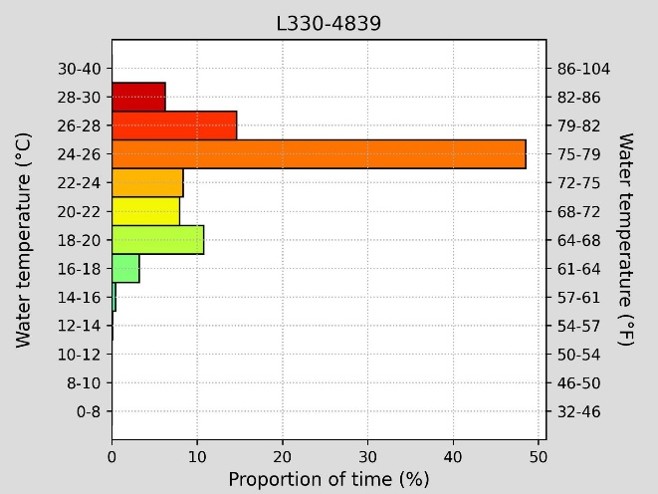
The tag on this second-place striped marlin surfaced on November 12, 2025, after the full programmed deployment duration of 180 days, 1,400 nm from the tagging location. Following deployment, this fish traveled northeast before turning south at the equator. The fish then circled back and passed near the deployment location, continuing southwest until the tag popped off northeast of New Zealand for an incredible total estimated track length of 7,022 nm. Over the course of the deployment, this stripe spent approximately 65% of the time within 10 m (33 ft) of the surface where the water temperature ranged between 17 and 29°C (63 – 84°F). Deeper dives typically ranged between 50 and 200 m (164 – 656 ft), where the water temperature ranged between 15 and 28°C (59 – 82°F). The deepest dive of the deployment occurred on September 16, 2025, to a depth of 373 m (1,224 ft), where the water temperature was 15°C (59°F). The coldest water at 13°C (55°F) was experienced on October 24, 2025, at a depth of 351 m (1,152 ft).
_______________________________________

Team "Sea Striker's" tag, sponsored by the Big Rock Foundation, took third Place
Coming in third place in the 2025-2026 IGFA Great Marlin Race was a 250 lb blue marlin tag sponsored by The Big Rock Foundation and deployed off North Carolina by Sea Striker, captained by Pete Zook. The fish was caught by Dave Pfeiffer and tagged by Adrian Holler. The IGFA is excited to, once again, see a Big Rock tag place in the annual race. In recent years, the Big Rock Blue Marlin Tournament and the IGFA have partnered through a grant from The Big Rock Foundation to deploy five tags at the tournament each year.
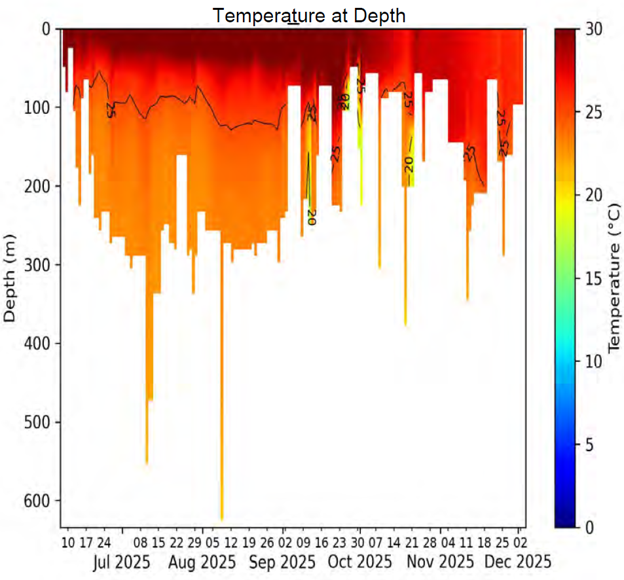
The third place tag surfaced on December 6, 2025, reaching the full programmed deployment time of 181 days and 1,304 nm from the tagging location. Following deployment, this fish traveled east towards Bermuda and then returned to the general tagging location. This blue then moved northeast off the coast of Virginia but quickly continued east into the Atlantic, where the tag popped off for a total estimated track length of 3,895 nm. Over the course of the deployment, the fish spent approximately 55% of the time within 10 m (33 ft) of the surface where the water temperature ranged between 22 and 30°C (72 – 86°F). Deeper dives typically ranged between 25 and 100 m, where the water temperature ranged between 16 and 30°C (61 – 86°F). The deepest dive occurred on August 10, 2025, to a depth of 624 m (2,047 ft), where the water temperature was 21°C (70°F). The coldest water experienced was 14°C (57°F) on October 7, 2025, at a depth of 221 m (725 ft).
_______________________________________
The impressive journeys recorded during the IGFA Great Marlin Race represent far more than a contest of distance. Each tag deployed contributes valuable scientific data that helps researchers better understand billfish behavior, information that is essential to conserving these iconic species and maintaining healthy ocean ecosystems.
“The IGFA Great Marlin Race highlights the extraordinary impact anglers can have beyond the catch,” said IGFA President Jason Schratwieser. “Each year's participants contribute critical data that supports billfish research and conservation, and our winners exemplify that spirit. Their achievement reflects not only an incredible fish, but also a meaningful contribution to billfish science and conservation.”
 The IGFA extends heartfelt congratulations to this year’s winners and sincere gratitude to all anglers, captains, clubs, and sponsors whose support makes this groundbreaking research possible. Presented by Costa Sunglasses, the IGFA Great Marlin Race is a research collaboration between IGFA and Stanford University and is sponsored by AFTCO, Bass Pro Shops and Cabela’s Outdoor Fund, PENN, Yamaha Rightwaters, and the Big Rock Foundation. Their collective efforts help secure the future of billfish and the sport of game fishing for generations to come. To learn more or get involved, please visit www.igfa.org/the-great-marlin-race.
 To learn how you can support this cutting-edge billfish satellite tagging initiative, please contact IGFA Conservation Director Dr. Bruce Pohlot by email at