Funding the Science to Protect Golden Dorado
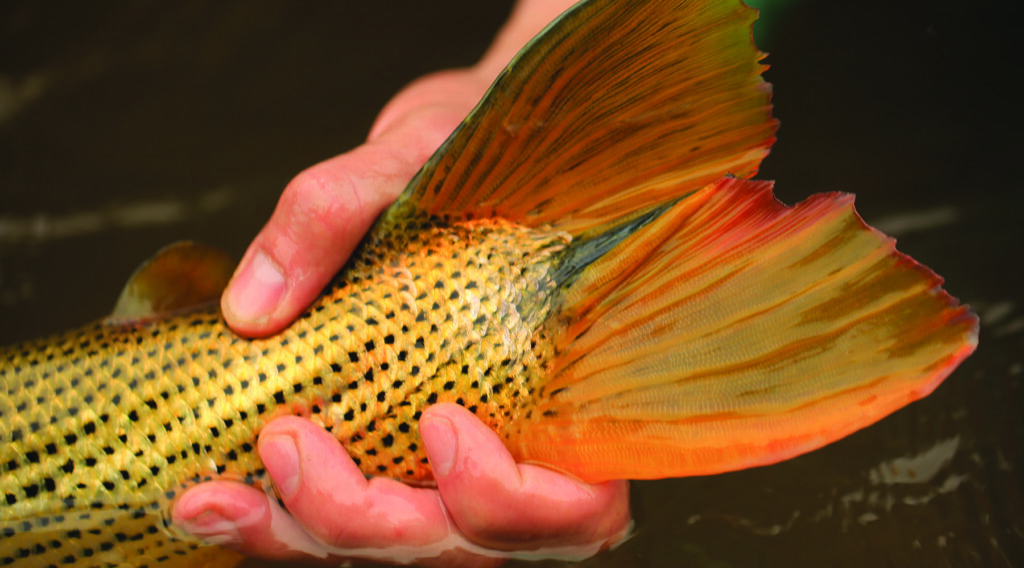
Golden dorado have captured anglers worldwide, and the IGFA is proud to fund the research that is helping ensure their future. Our support has made possible a collaborative project led by Dr. Andy Danylchuk of UMass Amherst, combining population genetics with surveys of the anglers and guides who know these fish best. The project grew from a simple question: How can we take better care of golden dorado when they are caught and released? Early catch-and-release research found that little science existed to answer it, and it set the stage for the broader effort we are advancing today.
That effort rests on people as much as science, and no one embodies this better than IGFA Trustee Juan Pablo Gozio. Our champion in Argentina, Juan Pablo has been instrumental in advancing golden dorado conservation, including playing a key role in establishing the country’s first catch-and-release regulations for the species. He has used his leadership positions to promote ethical angling and raise awareness across South America, ensuring that the science we fund connects to the communities, guides, and anglers who depend on this fishery. Together with partners like IGFA Captain Matías Pavoni and Dr. Eva Rueda, who helped collect the tissue samples at the heart of the genetic work, the project is a powerful example of citizen science in action.
 The results so far justify the investment. Hundreds of fin clips from guides, anglers, and in-country partners have produced terabytes of genetic data, along with a publicly available reference genome that any scientist can use. The analyses reveal distinct genetic differences between golden dorado in Bolivia’s Amazon basin and those in the Rio de la Plata basin. Differences also appear within the Rio de la Plata basin, particularly around dams and in isolated rivers like the Rio Dulce and Rio Salado. These populations are not distinct enough to be new species or subspecies, but they differ enough to suggest that each region needs its own management approach.
The work continues. A survey of anglers and guides, offered in English, Spanish, and Brazilian Portuguese, gathered insight into what motivates golden dorado anglers and what threats they perceive, and the results will inform outreach, management, and policy. A new study using electronic tags will examine whether only part of the population migrates, how far, and whether that behavior is heritable.
 The First Argentine Congress of Ichthyology
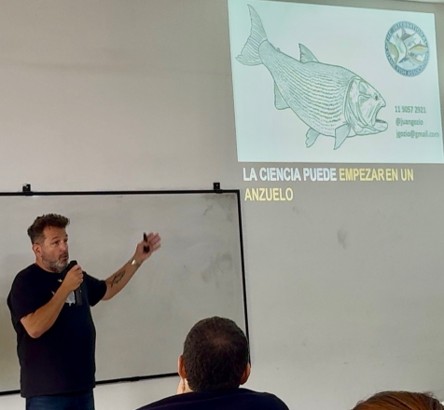
Last month, Juan Pablo represented IGFA at the First Argentine Congress of Ichthyology, held October 18–21 in Santa Fe, Argentina, where IGFA was one of the main sponsors. Organized by the Universidad Nacional del Litoral with other Argentine scientific institutions, the Congress brought together researchers and professionals from several countries to exchange knowledge on biodiversity, genetics, conservation, fisheries management, and aquaculture. Researchers and fisheries managers who develop policy in the La Plata River Basin in Argentina, as well as in neighboring countries that share these river systems, were among those in attendance. It was also a milestone for the region. After eight editions of the Argentine Ichthyology Symposium, the event was held for the first time as a Congress. It will now take place every two years, with the next edition planned for Chubut Province.
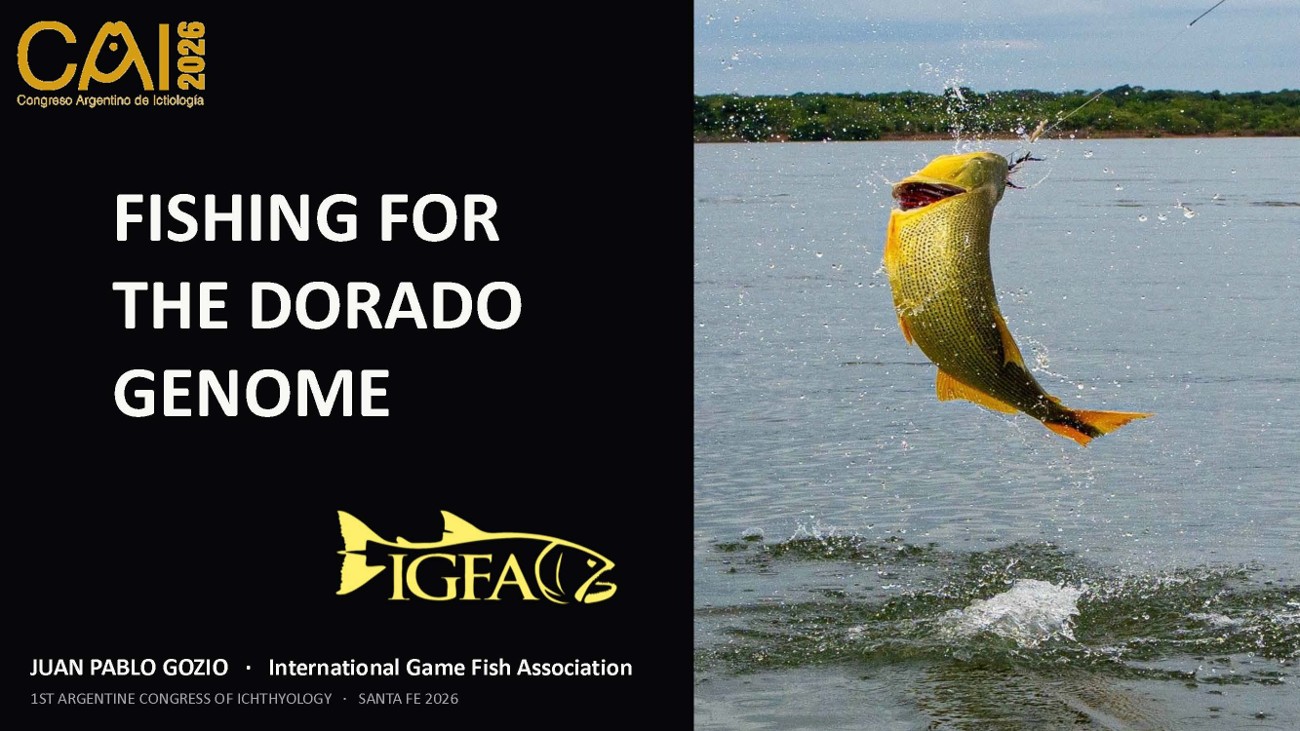
Juan Pablo presented “Fishing for the Golden Dorado Genome: The Golden Dorado Research Initiative Experience,” sharing a session with Dr. Rueda, one of the Congress organizers, and Dr. Danylchuk, who joined remotely. The talks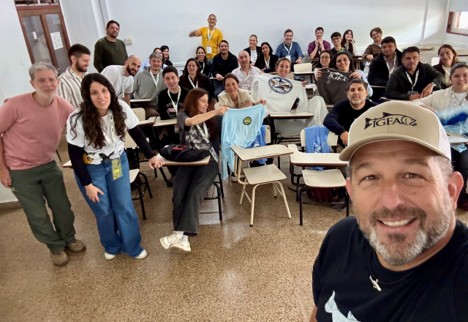 were independent but complementary: Dr. Danylchuk offered the scientific perspective, while Juan Pablo focused on IGFA’s experience and the role recreational anglers can play in making research possible. He opened with the story of the first golden dorado he caught at age ten in the Port of Buenos Aires, and traced how that fascination grew into a lifelong commitment to the species’ conservation.
His central message was that an organization of recreational anglers can identify research needs that don’t always receive enough attention or funding through traditional government or private channels. By engaging sponsors, mobilizing resources, connecting institutions, and involving anglers and guides, IGFA helped specialized researchers carry out a project of considerable scope. In Juan Pablo’s view, this collaboration between an NGO, its sponsors, scientists, and anglers is one of the Golden Dorado Research Initiative’s greatest achievements and a model that could be replicated with other species and regions.
The IGFA is honored to support this work and to stand alongside the partners making it possible.