Integrity on the Line
Why IGFA Rules Matter More Than Ever in Tournament Fishing, World Records and Fair Play
By Patrick Mansell
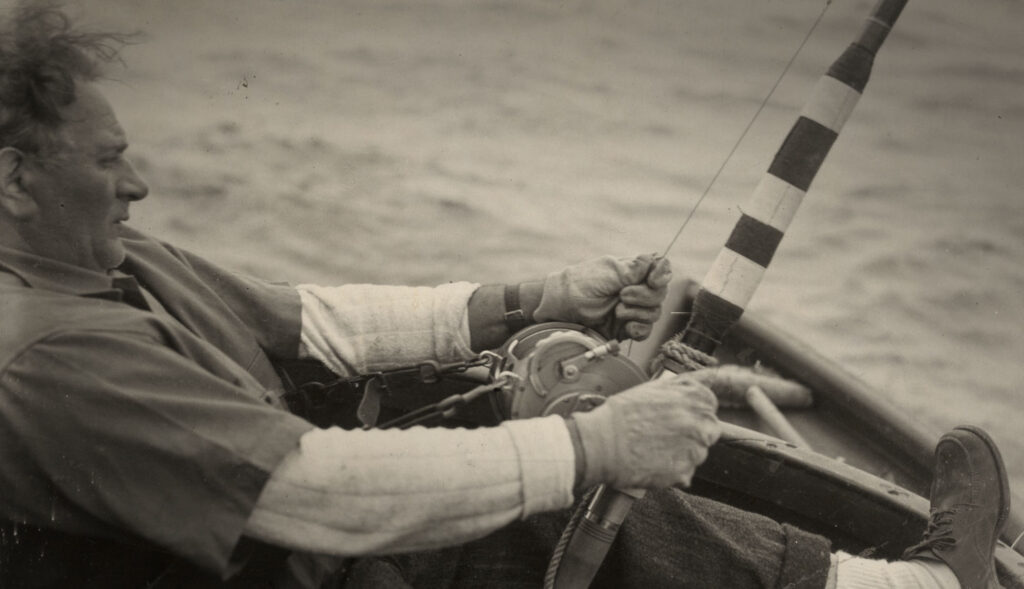
Long before electronic charts, carbon-fiber rods, and digital scales, sportfishing faced a fundamental problem - how to compare one angler’s achievement to another’s fairly. A record claimed in one port might be impossible to verify in another. Equipment varied wildly. Stories grew larger with every retelling.
That is where sportfishing separates itself from simple fish catching. Most anglers understand regulations - seasons, size limits, closed areas - rules set by states, NOAA, and international management agencies to protect fish stocks and manage fisheries. Those regulations are enforced by law, and rightly so. But alongside them exists another system, one that governs fairness. That system is built on ethical angling rules for our sport, and it is administered by the International Game Fish Association.
The IGFA was created to bring order to that chaos, not by regulating fisheries, but by setting standards for anglers themselves.
While governments manage fish populations through laws and enforcement, the IGFA established a voluntary code that defines what constitutes a legitimate catch. Those rules have become the backbone of competitive angling, bringing consistency to tournaments, ensuring fairness among anglers, and preserving the integrity of the sport’s highest achievements.
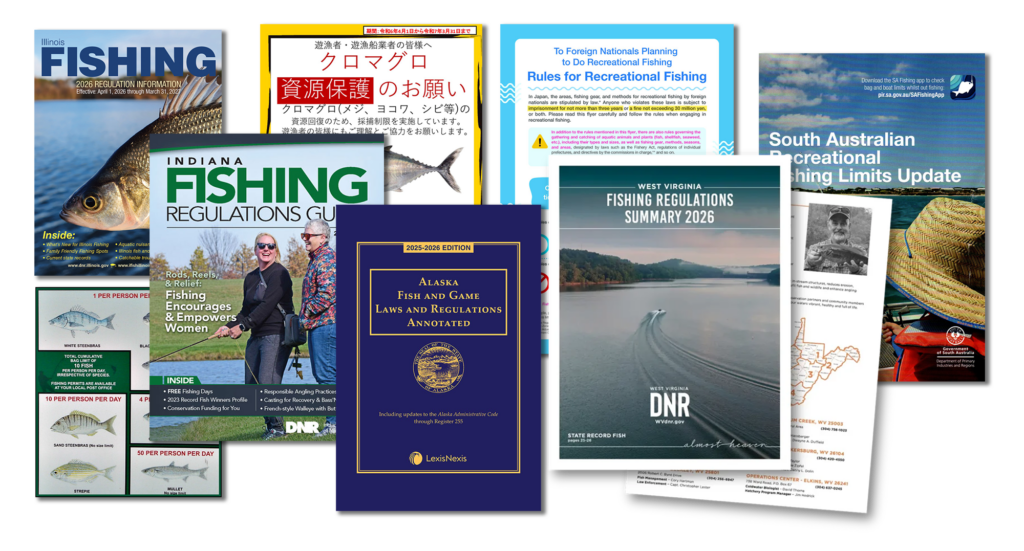
For more than eighty years, the IGFA has served as the sport’s neutral referee. It does not tell anglers when they may fish or how many fish they may keep. Although catches submitted for IGFA records and its other recognition programs must adhere to local fisheries regulations. Instead, it defines how a fish must be caught for that catch to be measured honestly against another in a tournament, across oceans, or in the permanent record books of the sport.
Those rules are not theoretical. They come alive at the end of a fly line, in the final minutes of a light-tackle fight, and in the hard realities of bringing large, powerful fish to the leader without assistance. A few examples illustrate how that works in practice.
Fly Fishing — Skill Over Strength

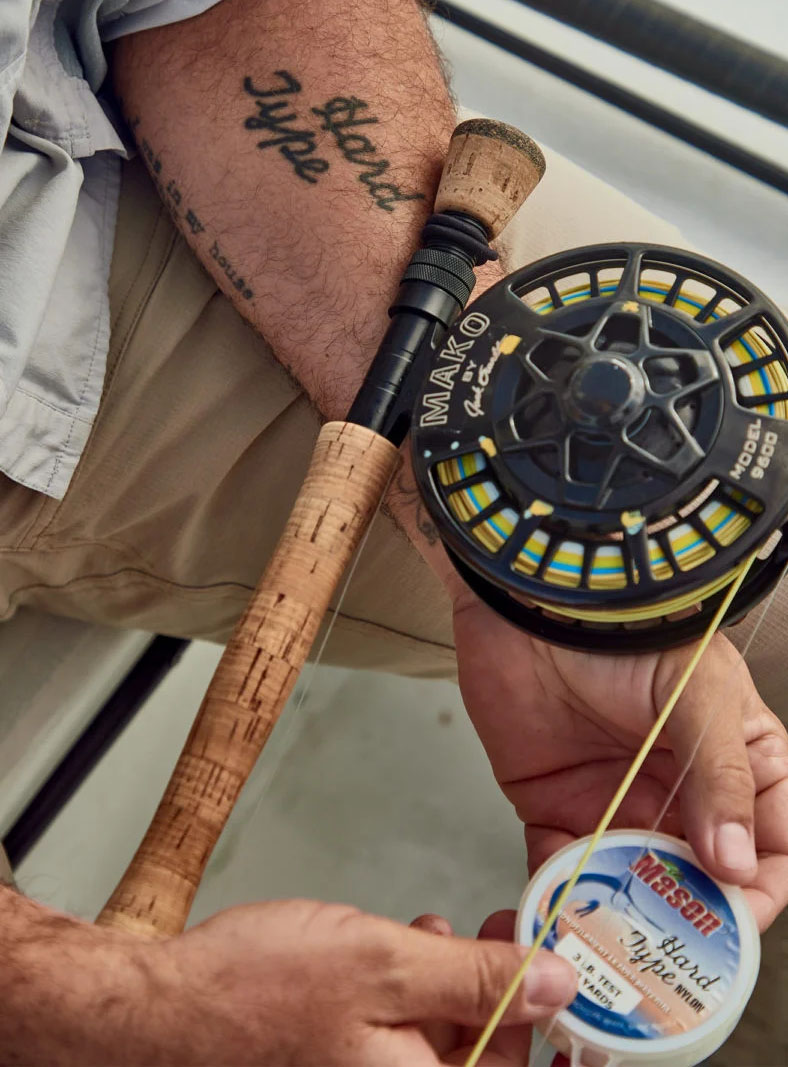
Few fisheries expose the intent of IGFA rules as clearly as modern fly fishing for powerful species. In some destinations, anglers routinely use 50- to 60-pound monofilament as leaders without IGFA-class tippet when targeting species such as giant trevally or marlin. This practice may be effective, but it falls well outside IGFA standards. It is also, quite frankly, not fly fishing in its truest definition.
IGFA fly-fishing rules strictly limit the length and breaking strength of leaders and tippets, with a maximum class tippet of 20 pounds. These limits ensure that the class tippet remains the weakest connection and primary connection to the fish. The rules also prevent anglers from extending shock tippets beyond allowable lengths or building systems that turn fly fishing into something else entirely. To quote the late IGFA Fishing Hall of Famer, Mark Sosin, who helped develop the IGFA’s rules for fly fishing: “Fly fishing was never intended to be an unlimited category…”
“Fly fishing was never intended to be an unlimited category…”
- IGFA Fishing Hall of Famer, Mark Sosin
The result is a level field where success is determined by presentation, timing, knot-tying skills, and fish-fighting techniques rather than over-matched tackle. Under these standards, a fly-caught fish taken in the Seychelles can be fairly compared to one landed in Australia or the Bahamas. The fish does not care how it was caught, but the record books do.
Marlin on Light Tackle - Time, Pressure, and Discipline

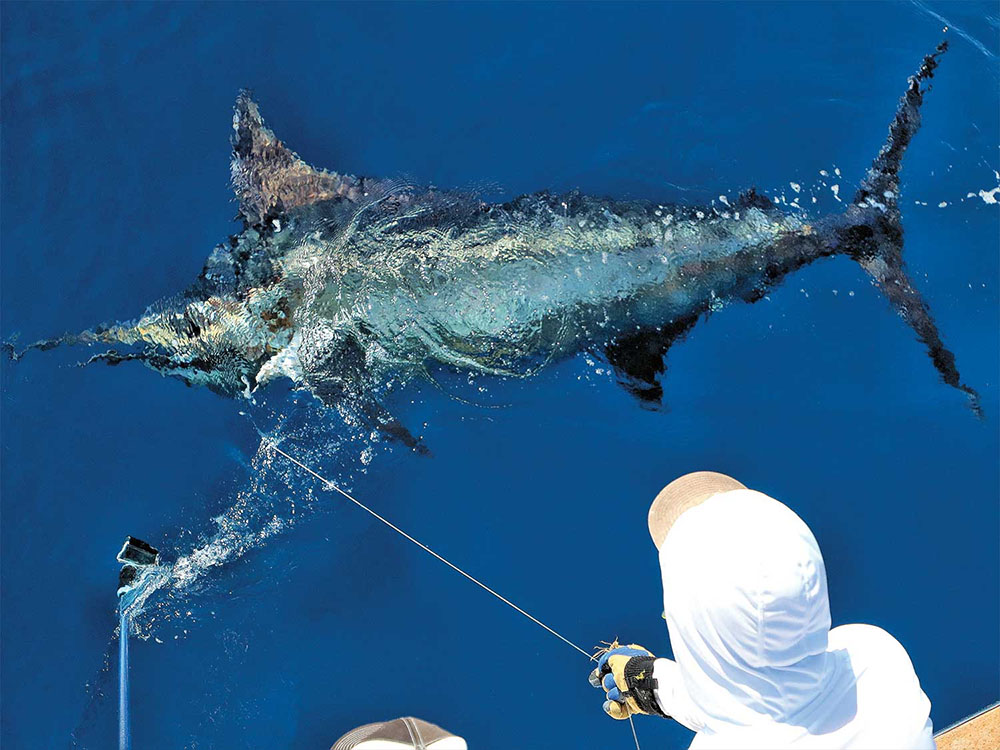
Light-tackle marlin fishing pushes anglers into a narrow margin where patience and discipline matter as much as skill. IGFA rules governing line class, leader length, and allowable assistance are designed to prevent the escalation of advantages that technology and teamwork can introduce. The rules limit how and when a leader can be touched, prohibit certain forms of mechanical or physical assistance, and define exactly what constitutes a legal catch. These details matter, no matter if you are fishing for records, in a tournament, or just for fun.
Without these rules, light-tackle records would quickly lose meaning. With them, a striped marlin caught on 12- or 16-pound line off New Zealand can stand shoulder-to-shoulder with one taken in Baja or Kona, measured not by conditions, but by compliance.
Swordfish on Conventional Gear - Control Without Shortcuts
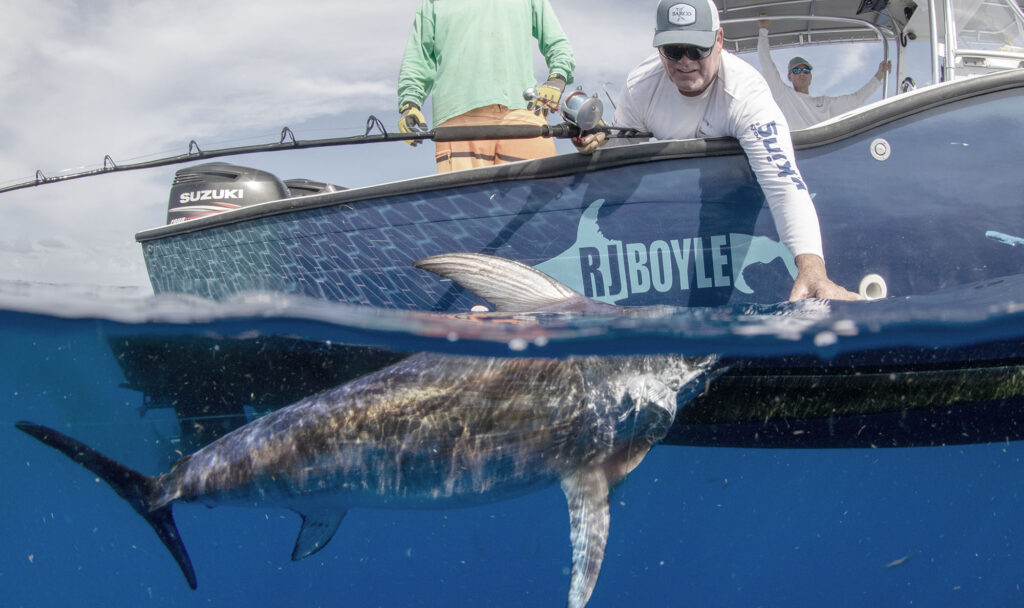
Few fisheries test both equipment and restraint like daytime swordfishing. Battles can last hours, fatigue sets in, and the temptation to assist at the boat grows as the finish approaches. IGFA conventional tackle rules place strict limits on the use of electric reels, leader length, hook configuration, and physical assistance, ensuring that the angler remains connected to the fish through skill and endurance rather than shortcuts and unsportsmanlike mechanical advantages. These rules are especially relevant in swordfish fisheries, where size, power, and prolonged fights magnify the consequences of even small violations.
A swordfish landed legally under IGFA rules represents more than strength; it represents discipline. It demonstrates that even in the most demanding fisheries, fairness and comparability still matter.
IGFA Rules and Tournament Standardization
The influence of IGFA rules becomes even clearer when the focus shifts from individual achievement to organized competition. Tournaments, by their nature, demand consistency. Anglers travel across borders, fish unfamiliar waters, and compete against crews with different boats, budgets, and local knowledge. Without a shared rulebook, results would be impossible to compare, and credibility would suffer.
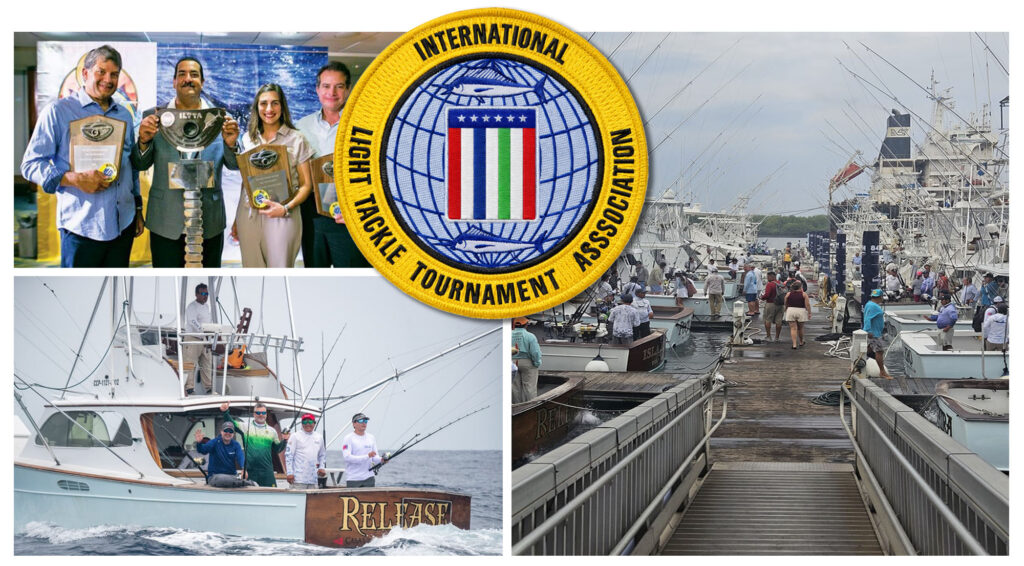
Take the International Light Tackle Tournament Association (ILTTA) tournament series as an example. Drawing some of the most skilled light-tackle anglers in the world, these events are held where precision, discipline, and technique are paramount, and competition is exceptionally high. By aligning closely with IGFA standards, ILTTA ensures that every catch reflects the true ability of the angler from bite to release. When a fish is brought to the leader under these rules, there is no ambiguity about how it was caught or whether assistance crossed the line. The result is a level of credibility and integrity that elevates not only the competition but the accomplishment itself.
An experienced mate hooking a fish and passing the rod can certainly make it easier for another angler to catch a fish. But in those cases, the angler isn’t really catching the fish from beginning to end.
The same philosophy applies to tournaments that do not allow “hook and hand,” where a mate or other team member may hook a fish and pass the rod to another angler. One of the IGFA’s cardinal rules is that once a fish strikes or takes a bait or lure, nobody but the angler may touch the rod, reel, or line. An experienced mate hooking a fish and passing the rod can certainly make it easier for another angler to catch a fish. But in those cases, the angler isn’t really catching the fish from beginning to end. The bite and properly feeding and hooking a fish is the best part of the game. Sure, it takes skill and time to learn how to do this well, and even experienced anglers still miss strikes, but doing it the right way will eventually result in making you a better angler. Something all anglers aspire to be.
A common real-world scenario outside of tournaments further illustrates this: on many charter boats, mates are trained to react instantly to a bite, often reaching the rod before the angler and setting the hook out of instinct. While efficient, this exact action would result in disqualification under IGFA rules if contact is made after the strike, even momentarily. These examples reinforce that success is not measured solely by the number of fish brought to the boat, but by the angler’s ability to perform every step of the process under real conditions, from the initial bite to the final release.
The Stakes Can Be Enormous


For tournament anglers and record chasers, where livelihoods and major investments are on the line, following the rules matters because even small mistakes can be costly.
Tournament fishing and record chasing are not games. In an era when tournament purses can reach into the millions of dollars, a single rule violation can carry staggering financial consequences. Many participants are professional tournament anglers whose livelihoods and the success of their boats, crews, and sponsors depend on strict compliance. The same is true for record chasers who invest tens of thousands of dollars traveling to remote destinations such as the Amazon, Africa, or far corners of the globe in pursuit of a single opportunity. A careless mistake at the leader, an overlooked measurement, or a misunderstanding of the rules can undo an entire expedition.
Just as critical, an IGFA-eligible catch must comply not only with IGFA rules, but with all applicable local, state, and national laws. Harvest and transport regulations vary widely. In some jurisdictions, even possessing or transporting an over-slot fish, such as a snook in Florida, would make a record application invalid, regardless of how cleanly the fish was caught.
Captains and mates must read the IGFA rulebooks, keep copies aboard, and understand the regulations governing the waters they fish. Disqualification for failure to comply with these standards can be devastating, and there remains a widespread concern that too many charter captains and mates still do not fully understand the rules, putting entire fishing ventures and everyone involved in jeopardy.
From Rules to Sportsmanship
Knowing exactly when to take the leader is part of that discipline, as acting too early can cross the line from skillful execution into a rule violation that changes the outcome. Photo by Richard Gibson.
That shared framework does more than standardize results; it shapes behavior on the water. When anglers know the boundaries, competition becomes cleaner. Decisions made in the heat of a fight, whether to touch a leader, apply pressure, or back down harder, are guided by an understanding that the rules matter as much as the catch.
This is where sportsmanship enters the picture. IGFA rules clarify what “winning” actually means. They reward preparation, discipline, and patience over improvisation and shortcuts. Few anglers who fish serious tournaments want to explain a disqualification at the dock.
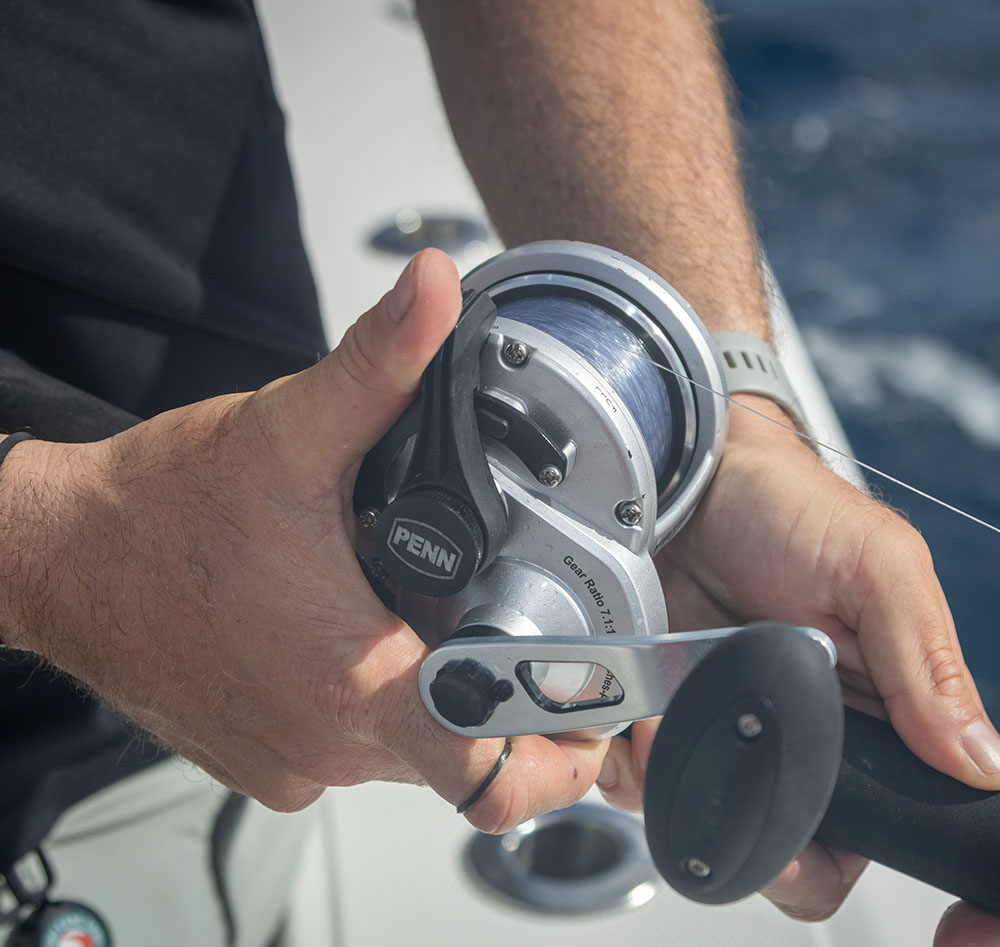
The same applies to drag, where proper timing and control are essential to skilled angling.
The Standard Behind the Record
Chasing a world record is rarely casual. Anglers travel thousands of miles, spend years refining tackle and technique, and invest fortunes in boats, crews, and time on the water. A record fish often represents not just a single catch, but a lifetime of preparation. When an application is submitted to the IGFA, it carries all that weight with it.
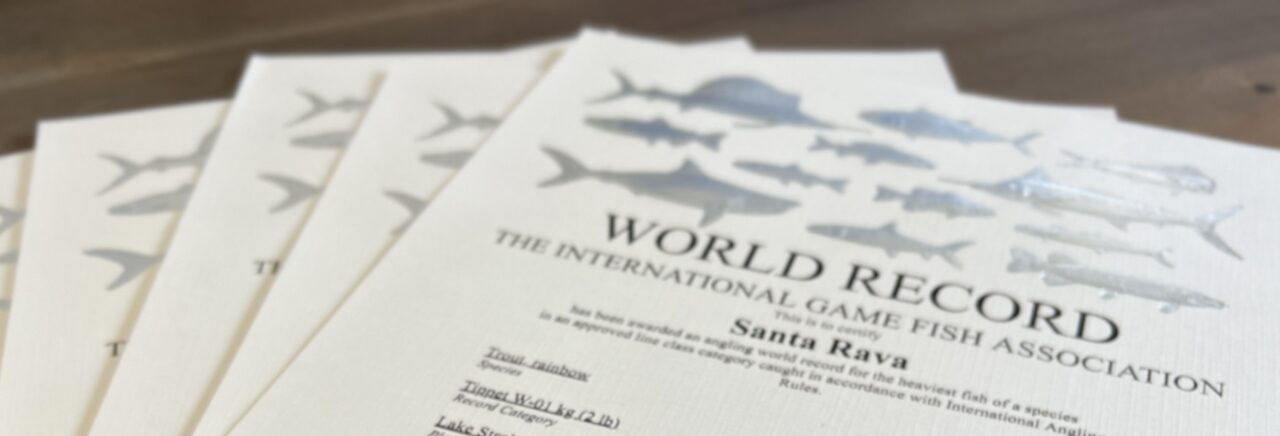
At IGFA headquarters, records are not rubber-stamped. They are examined in detail - line samples measured, leader lengths scrutinized, photographs reviewed, witness testimonies compared, timelines reconstructed. In some cases, the difference between acceptance and rejection comes down to millimeters, pounds, and ounces, or a single moment at the leader that went unnoticed at sea but becomes decisive on land.
Chasing a world record is rarely casual. Anglers travel thousands of miles, spend years refining tackle and technique, and invest fortunes in boats, crews, and time on the water. A record fish often represents not just a single catch, but a lifetime of preparation. When an application is submitted to the IGFA, it carries all that weight with it.
Nothing brings IGFA staff greater satisfaction than seeing an angler’s record application withstand the full rigor of the review process and be approved, confirming the fish was caught ethically, in a true sportsmanlike manner, and by the angler alone.
Those conversations are not easy. Emotions can run high. Anglers who have poured their lives into a single goal sometimes respond with frustration or disbelief. The IGFA staff absorbs that reaction not because they enjoy saying no, but because saying yes when the rules have been violated, even unintentionally, would undermine every record that came before it.
Every Sport Has Rules—Fishing Is No Different
Some may say that adhering to IGFA angling rules is only necessary when fishing for world records or participating in tournaments. But is that really the case? Fishing is a sport with both a rich history and a future in front of it. Every true sport is defined by its rules. Fishing is no exception.
Think of it this way, if you’re into, let’s say, tennis or baseball, even in a casual game with friends or family, you still follow the rules of the sport. You may not be competing at Wimbledon or the World Series, but the structure of the game remains the same. Fishing is no different. The rules aren’t just for competition, they define the integrity of the sport itself.
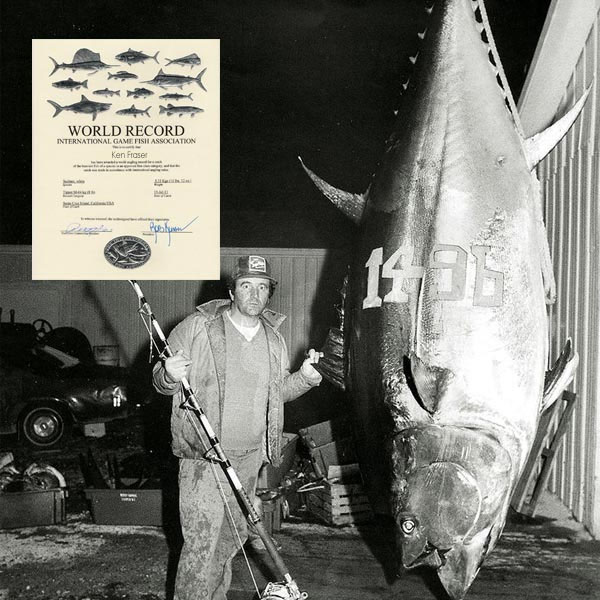
IGFA rules ensure that achievement in angling is defined by skill, discipline, and integrity, rather than being influenced by disproportionate tackle, outside assistance, or methods that diminish the role of the individual angler. The late Ken Fraser’s All-Tackle bluefin tuna remains one of the most significant records ever, distinguished not only by its size but by how it was caught, on compliant tackle and fought solely by the angler. It is this standard that gives the catch lasting significance and establishes it as a credible benchmark. By contrast, a fish taken on extremely heavy gear, fought by multiple individuals, or with an electric reel may still be impressive, but it represents a fundamentally different effort. Without a consistent framework of rules, such distinctions would be lost, diminishing the integrity of comparison. IGFA rules preserve that standard, ensuring the record book reflects not only what was caught, but how it was achieved.
The Quiet Authority of the Rulebook
In the end, the power of IGFA rules lies in their voluntary nature. No one is forced to follow them, yet the best anglers, the most respected tournaments, and the most enduring records almost always do. That quiet authority has allowed the IGFA to level the playing field across species, oceans, and generations, creating a common language for achievement in a sport defined by challenge, preparation, and integrity.
The rules are not there to limit ambition. They exist to protect it, because when a fish is remembered, whether in a tournament ledger or the permanent pages of the record book, it should be remembered for the right reasons, long after the dock talk fades.