Recapping the 10th Annual Forage Fish Research Program Data Workshop
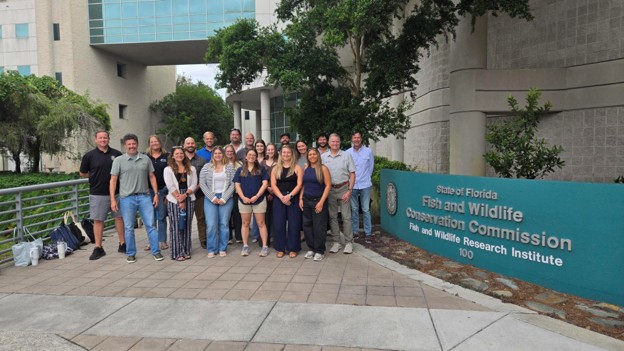
On Thursday, June 4th, 2026, the Florida Forage Fish Coalition, made up of the IGFA, Pew Charitable Trusts, Wild Oceans, Fish Florida, Florida Wildlife Federation, Angler Action Foundation, American Sportfishing Association, and the Tampa Bay Estuary Program, hosted the 10th Annual Forage Fish Research Program (FFRP) Data Workshop.
The Workshop is an annual opportunity for the FFRP to update interested stakeholders and the academic community on the work being done on Florida’s forage fish by the Florida Fish and Wildlife Conservation Commission’s Fish and Wildlife Research Institute (FWRI), FFRP Data Partners, and FFRP graduate student Fellows. The 2026 Workshop included presentations on the history of the FFRP Fellowship program, FWRI’s research priorities and data availability, and priority projects and research collaborations via the program’s Data Partners, including the Florida Department of Environmental Protection Office of Resilience and Coastal Protection’s Aquatic Preserve Program, Southwest Florida Water Management District, and the Tampa Bay Estuary Program.
Celebrating a decade since the FFRP’s inception, the 2026 FFRP Data Workshop marked a crucial milestone representing not just the completion of 17 graduate student Fellowships but the successful continuation of robust collaborations and partnerships. These relationships have been vital to the success of the FFRP and embody a win-win-win scenario for Florida’s fisheries, including advancing aquatic natural resource research, developing the next generation of marine scientists, and improving the public’s understanding of the ecosystem roles of forage fish and their environmental connections to enhance angling opportunities.
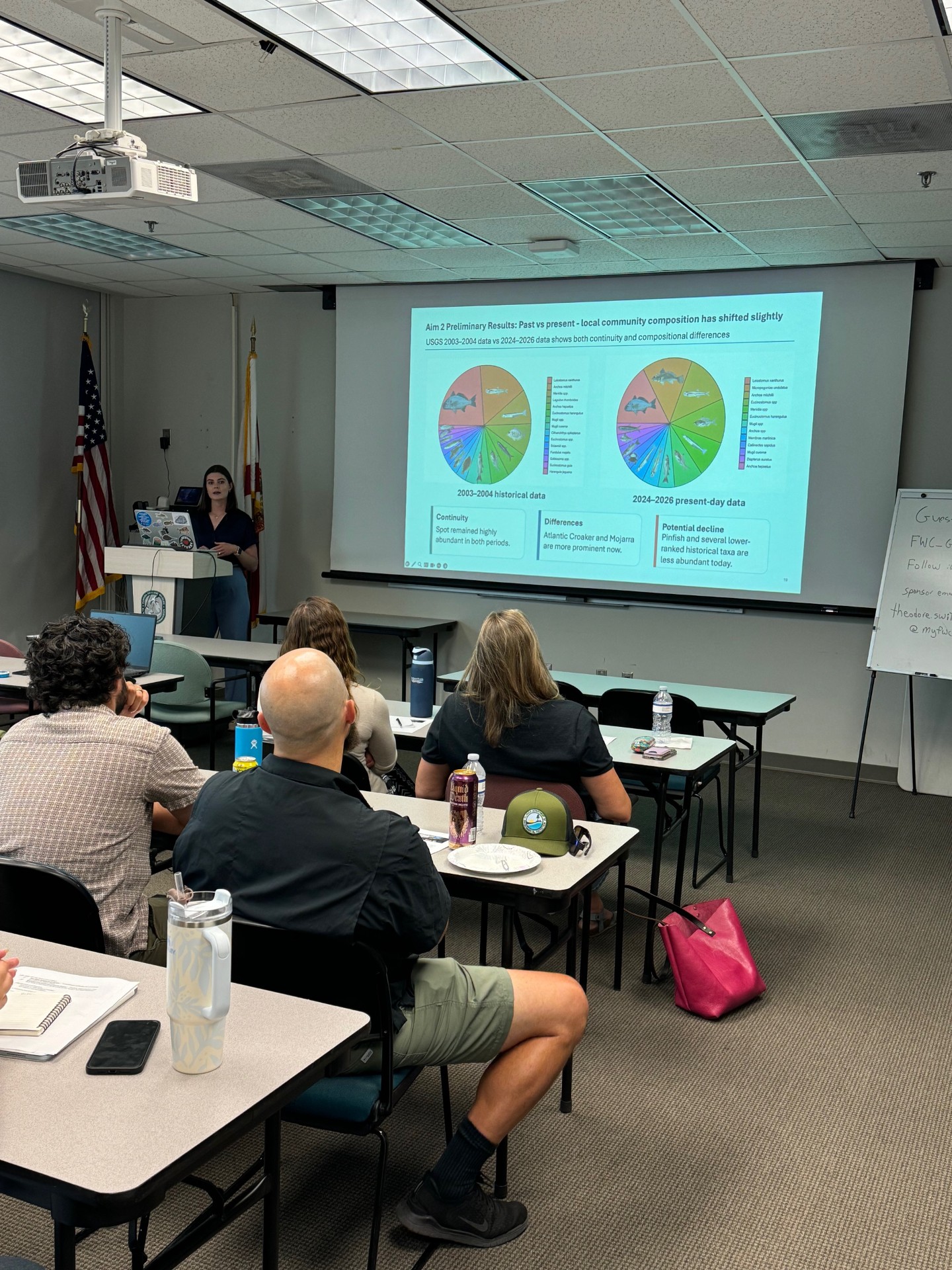
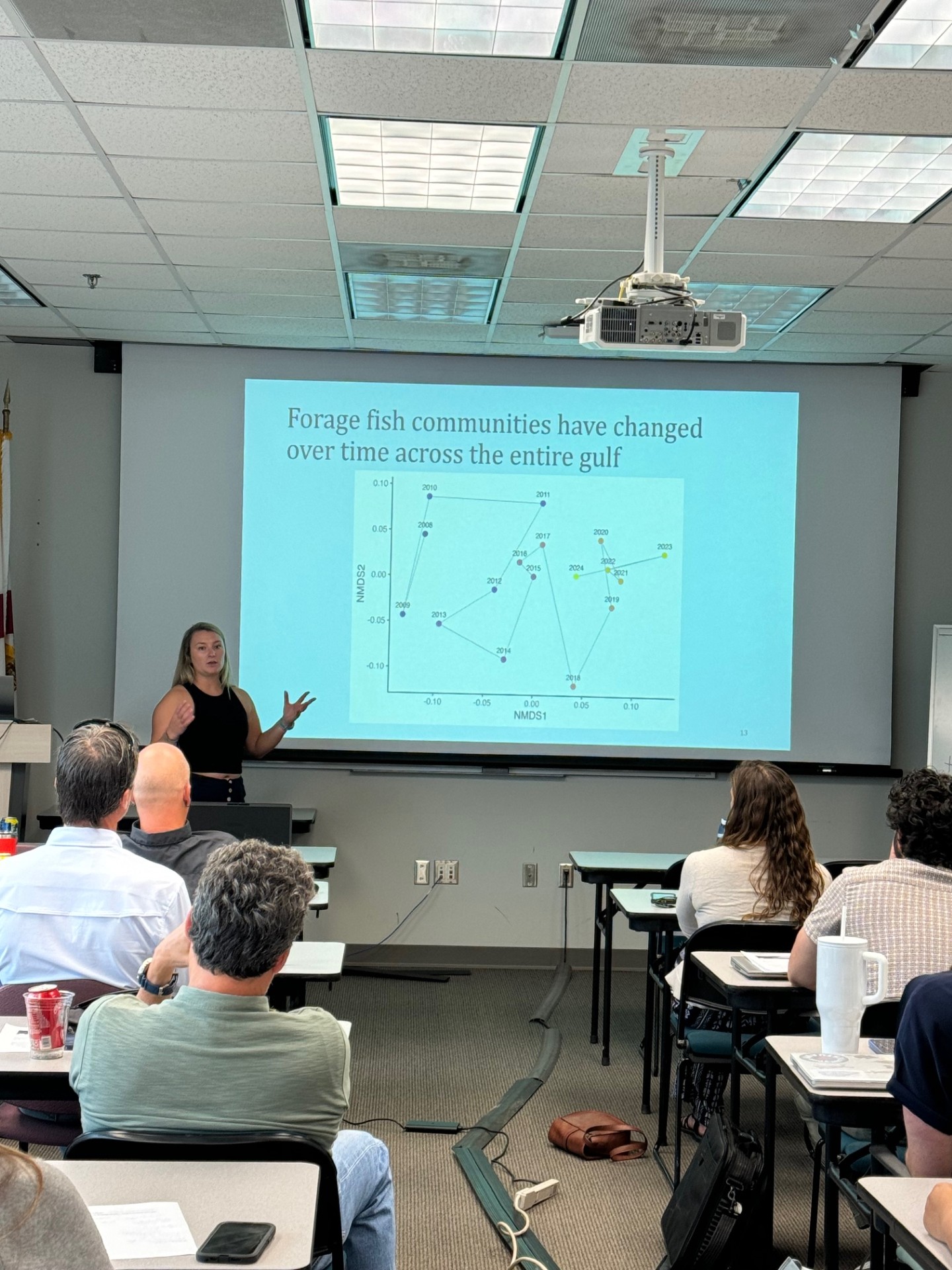
The highlights of each year’s Workshop are the presentations by current FFRP Fellows, Alex Walus and Meredith Pratt. Please see below for an overview of their research:
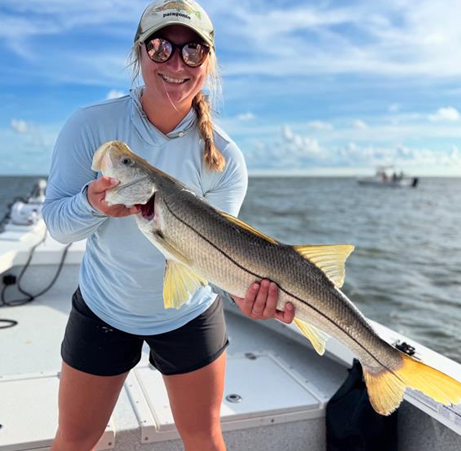
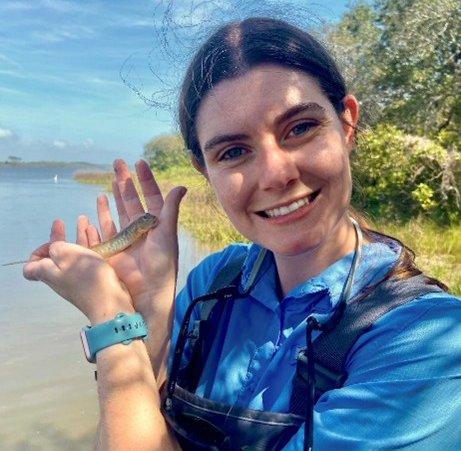
The FFRP Fellowship program has been a major success over the years, with 17 Fellowships funded, over $280,000 raised to support the Fellowships, and 11 peer-reviewed publications with more on the way. Fellows have gone on to work in academia and at numerous federal and state agencies, including the U.S. Geological Survey, the National Oceanic and Atmospheric Administration, and FWRI. Dakota Lewis, the only Fellow to receive the Fellowship twice while studying at two different schools, is quoted as saying, “The Forage Fish Research Fellowship has given me the freedom to be scientifically creative during my PhD. Ultimately, I have been able to leverage the support of the Forage Fish Research Program to expand the scope of my dissertation research across a broader geographic region and explore cutting-edge machine learning methodologies.”
Proposals for the 2026-2027 Fellowships are due on July 3rd, 2026, and we look forward to the great research that will be done by the next round of FFRP Fellows. Thanks to the continued generosity of Fish Florida, this competitive program will award two Fellowships in the amount of $20,000 per Fellow.
Looking forward, IGFA Conservation Programs Manager, Jackson Martinez, will be presenting a poster on the FFRP at the 2026 Annual Meeting of the American Fisheries Society in August. For more information about the Fellows and the program, go to https://floridaforagefish.org/, and please see our program infographic here.